"Long before Florida was a state, long before Europeans arrived, this land was home to some of the most sophisticated coastal cultures in North America. The Timucua, Calusa, Tequesta, and Apalachee peoples built their entire way of life around Florida's bays, estuaries, and rivers. They were master fishers, expert boat builders, and deep stewards of the water."
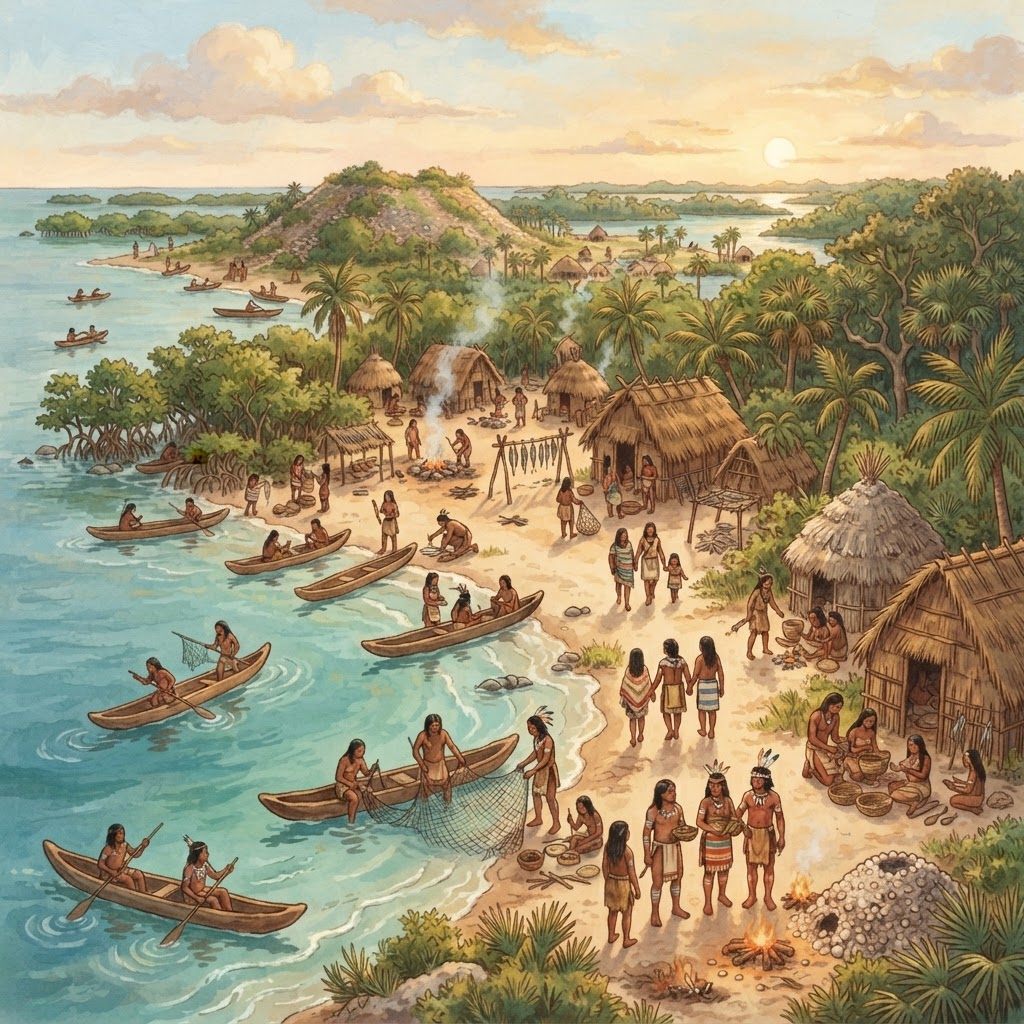
Florida's First Coastal Cultures
Before European contact, Florida was home to an estimated 350,000 indigenous people — one of the densest populations north of Mexico. These were not a single people, but several distinct nations. The Timucua lived across north Florida from the St. Johns River to the Jacksonville area — they were farmers and fishers who built large villages and spoke a unique language. The Calusa dominated southwest Florida, from the Gulf coast down toward the Keys — they were so powerful they were called the 'Calusa Empire,' controlling trade across south Florida without ever farming; they lived entirely on fish and shellfish. The Tequesta lived around the mouth of the Miami River and Biscayne Bay. The Apalachee farmed the rich red soils of the Florida Panhandle around present-day Tallahassee. Each group had its own language, leaders, and customs — but all shared a deep dependence on Florida's waters.