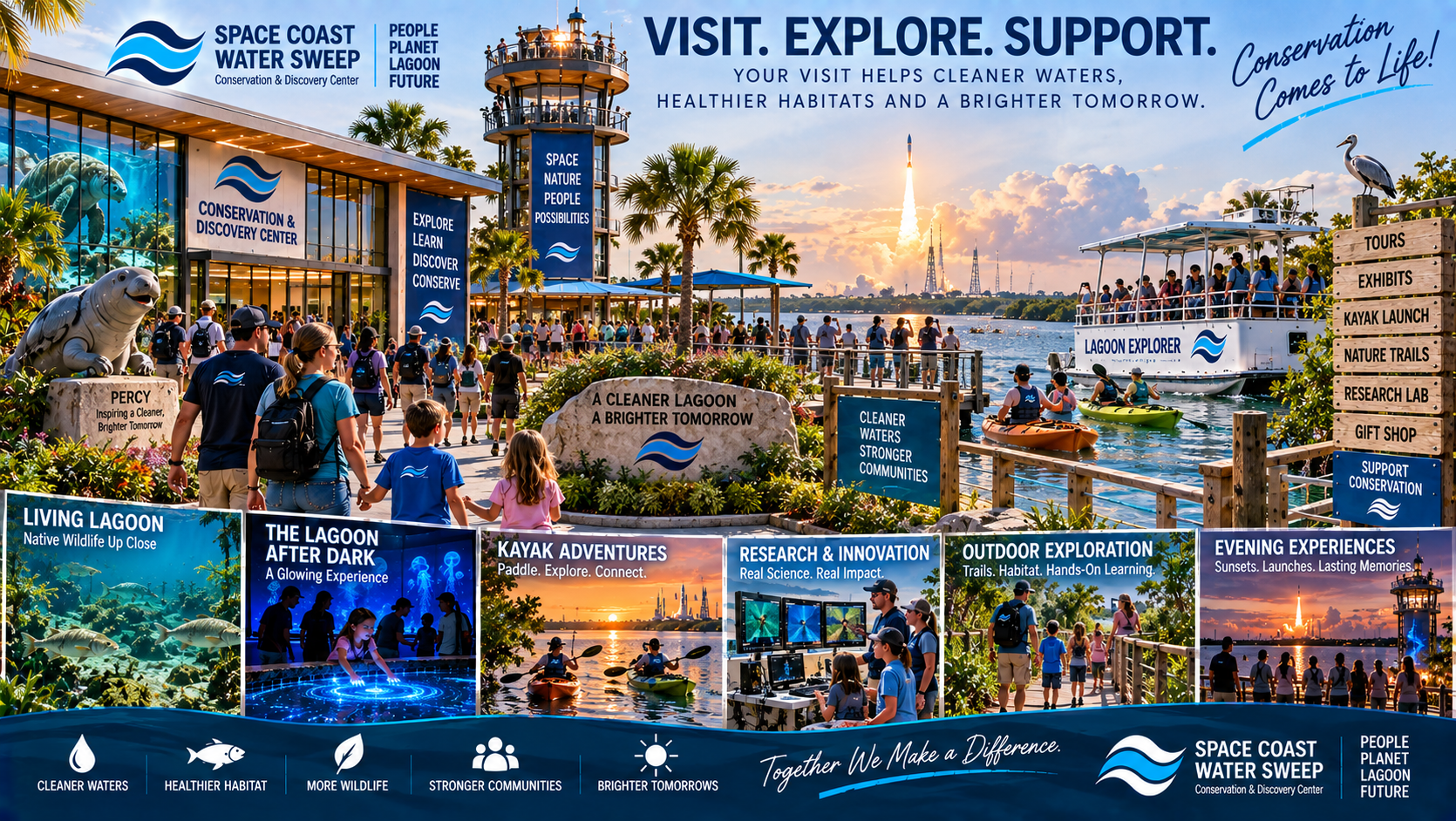
Don't Just Learn About the Lagoon.
Experience It.
The Conservation & Discovery Center is envisioned as a place where visitors can see, touch, explore and experience the Indian River Lagoon in ways that connect conservation science with adventure, technology and the natural beauty of Florida's Space Coast.
From living habitats and bioluminescence to kayaking, eco-tours and waterfront exploration, each experience should create another reason to visit — and another reason to care about the Lagoon.
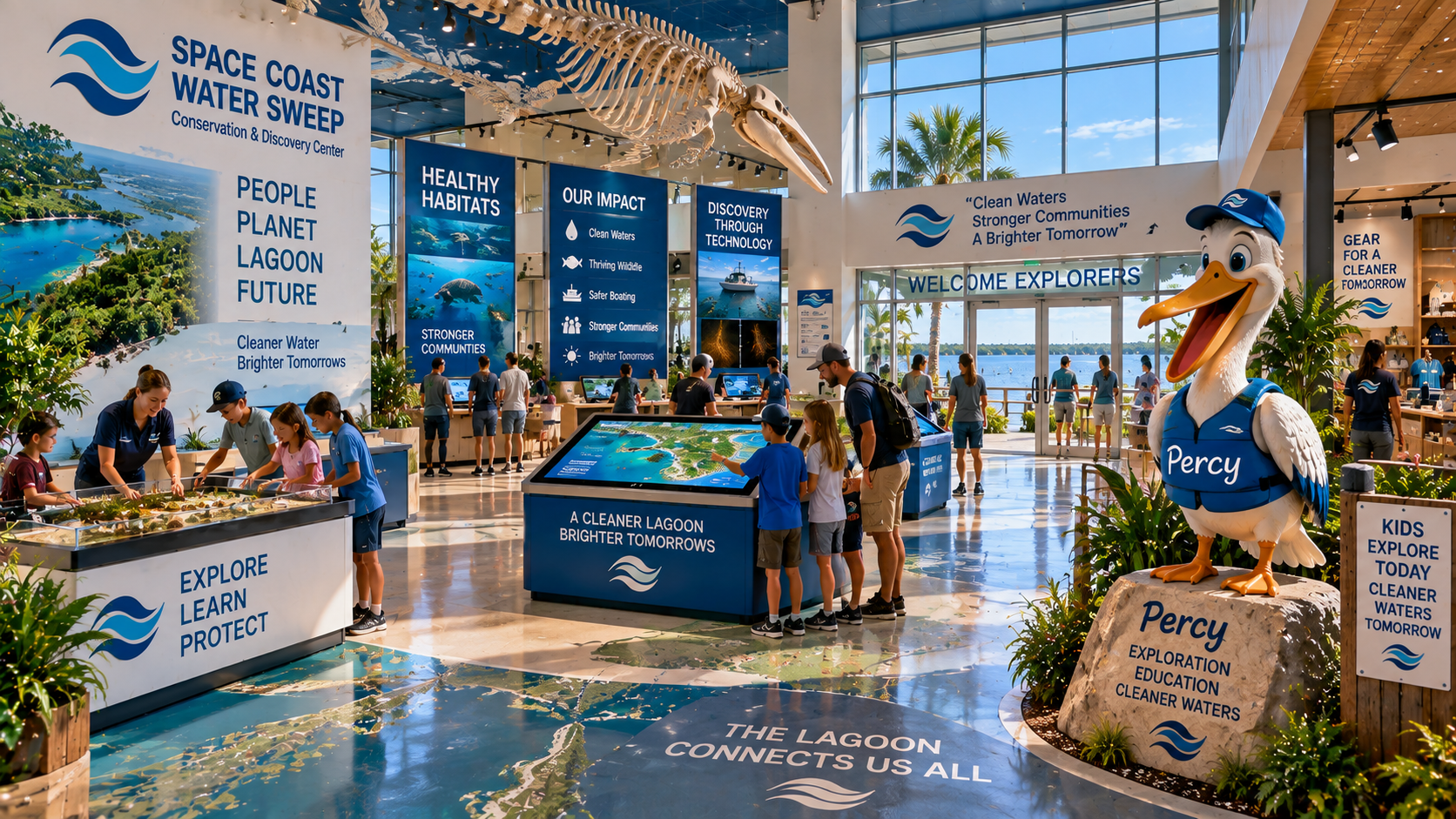
Every Living Thing Needs Water.
Water is not important only to fish and wildlife. Water supports people, communities, recreation, food, economies, habitats and life itself. We swim in it, boat on it, fish in it and enjoy being near it. Properly treated safe water is essential for drinking and everyday life.
When water becomes polluted or environmentally degraded, recreation, wildlife, habitat, community use and human health considerations can all be affected.
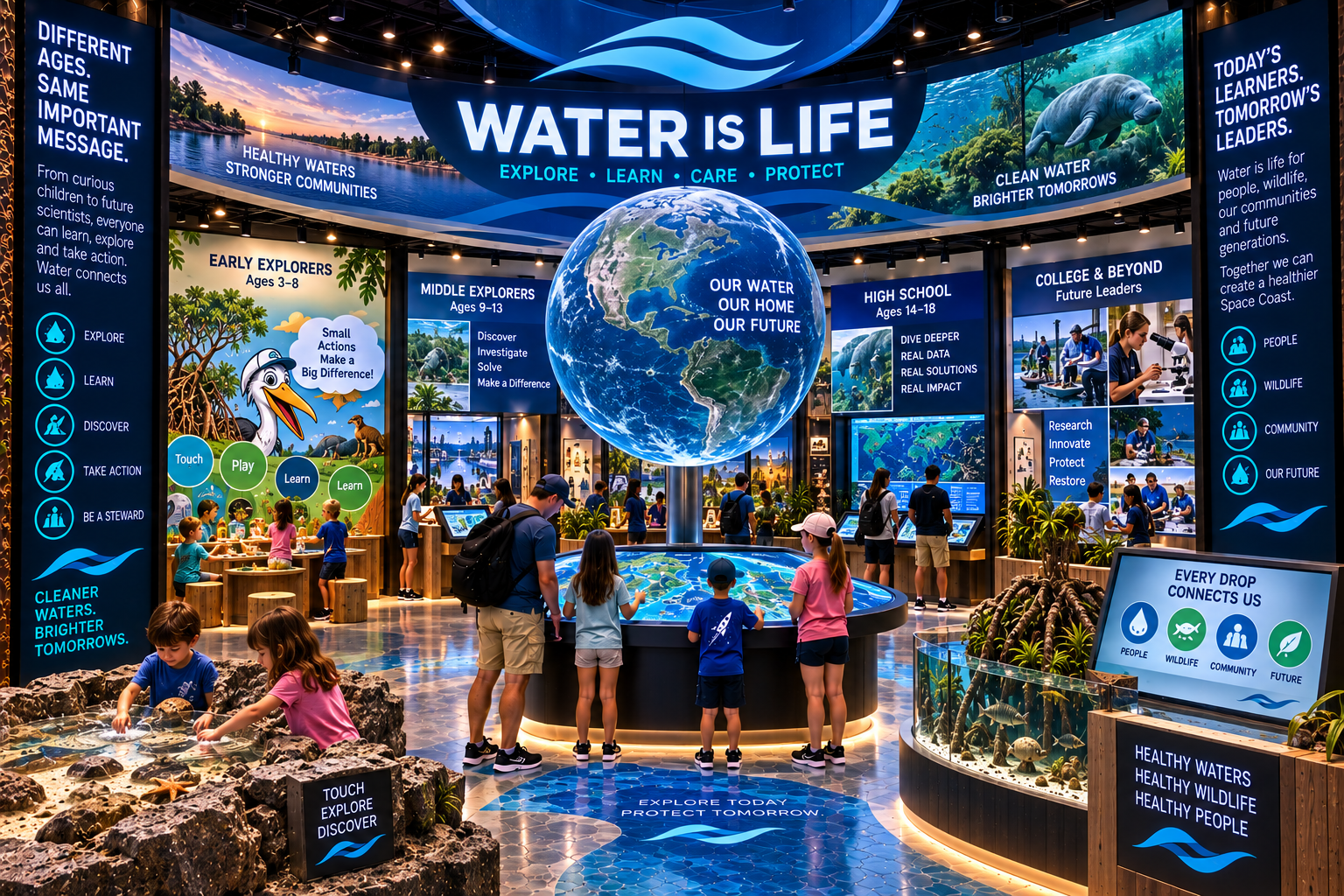
A Scientific Guardrail
Visually clear water does not automatically mean healthy or safe water. Water can look clean while containing things we cannot see. This exhibit teaches visitors to look beyond what's visible — to water chemistry, dissolved oxygen, salinity, temperature, nutrients, turbidity, microorganisms, microplastics and more.
CHILDREN CAN
- Make it rain
- Move water
- Build a shoreline
- Experiment with runoff
- Explore filtration
- Discover what may be hidden in water
DEEPER SCIENCE
- Water chemistry
- Dissolved oxygen
- Salinity and temperature
- Nutrients and turbidity
- Microorganisms and microplastics
- Watershed movement and human water use
Protecting water isn't only conservation. It is protecting a system that makes life possible.
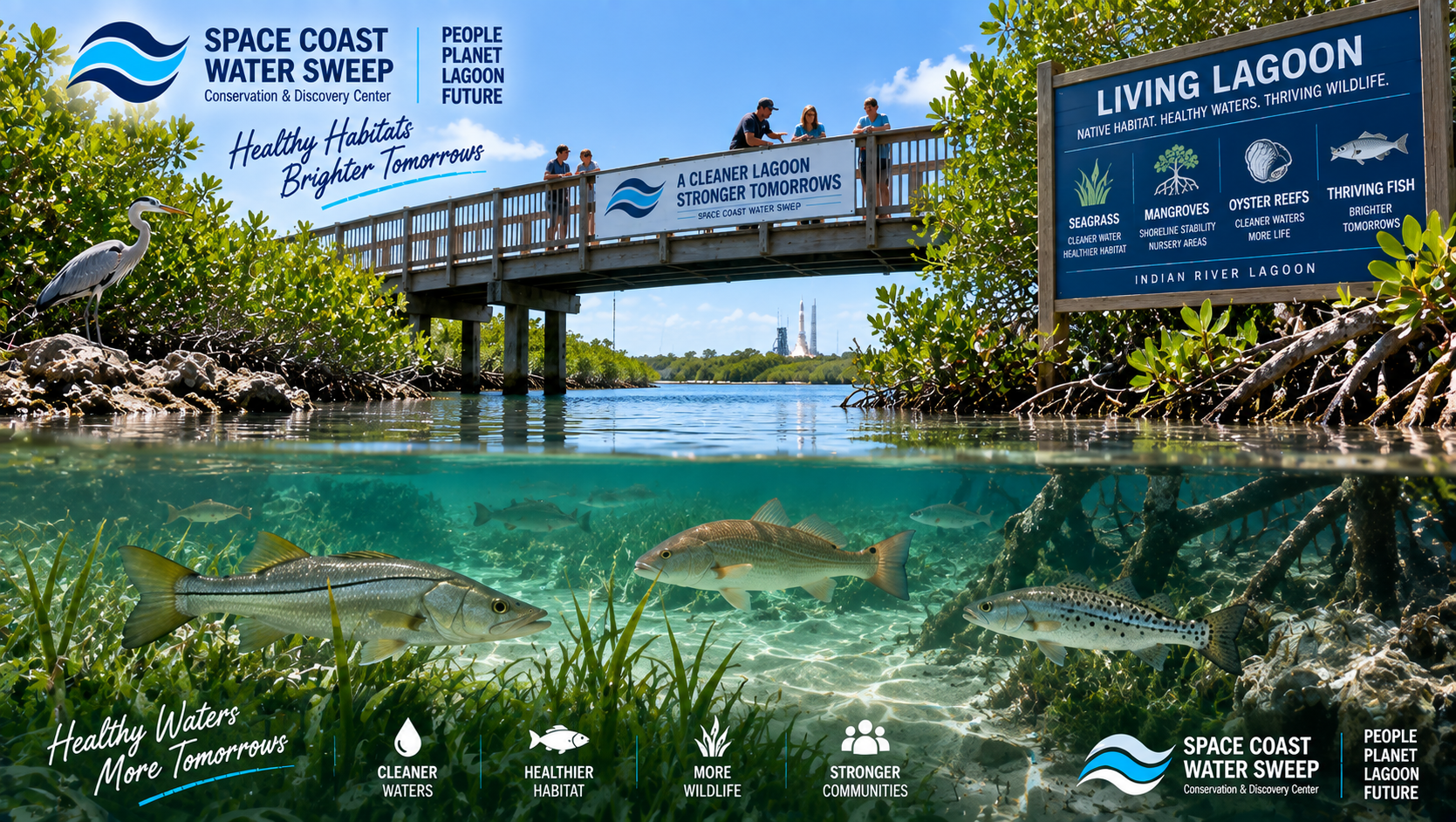
See the Lagoon We're Working to Protect.
The proposed Living Lagoon is a clear-water, lagoon-inspired outdoor habitat integrated into NatureScape and the Conservation Walk. It connects fish, habitat, water quality and conservation in a single living experience — designed for observation and education, not fishing.
Our Space Coast — People • Place • Lagoon
Our Space Coast is envisioned as a major permanent indoor gallery within the main Conservation & Discovery Center. It tells the interconnected natural, human, cultural, maritime and environmental story of Brevard County, the Space Coast and the Indian River Lagoon.
The gallery uses digital-first museum design — large digital walls, interactive maps, touchscreens, digital tables, changing exhibits, appropriate artifacts, photography, oral histories and interactive educational experiences. The existing SCWS educational lesson library and Percy's Conservation Academy serve as a deeper educational content layer.
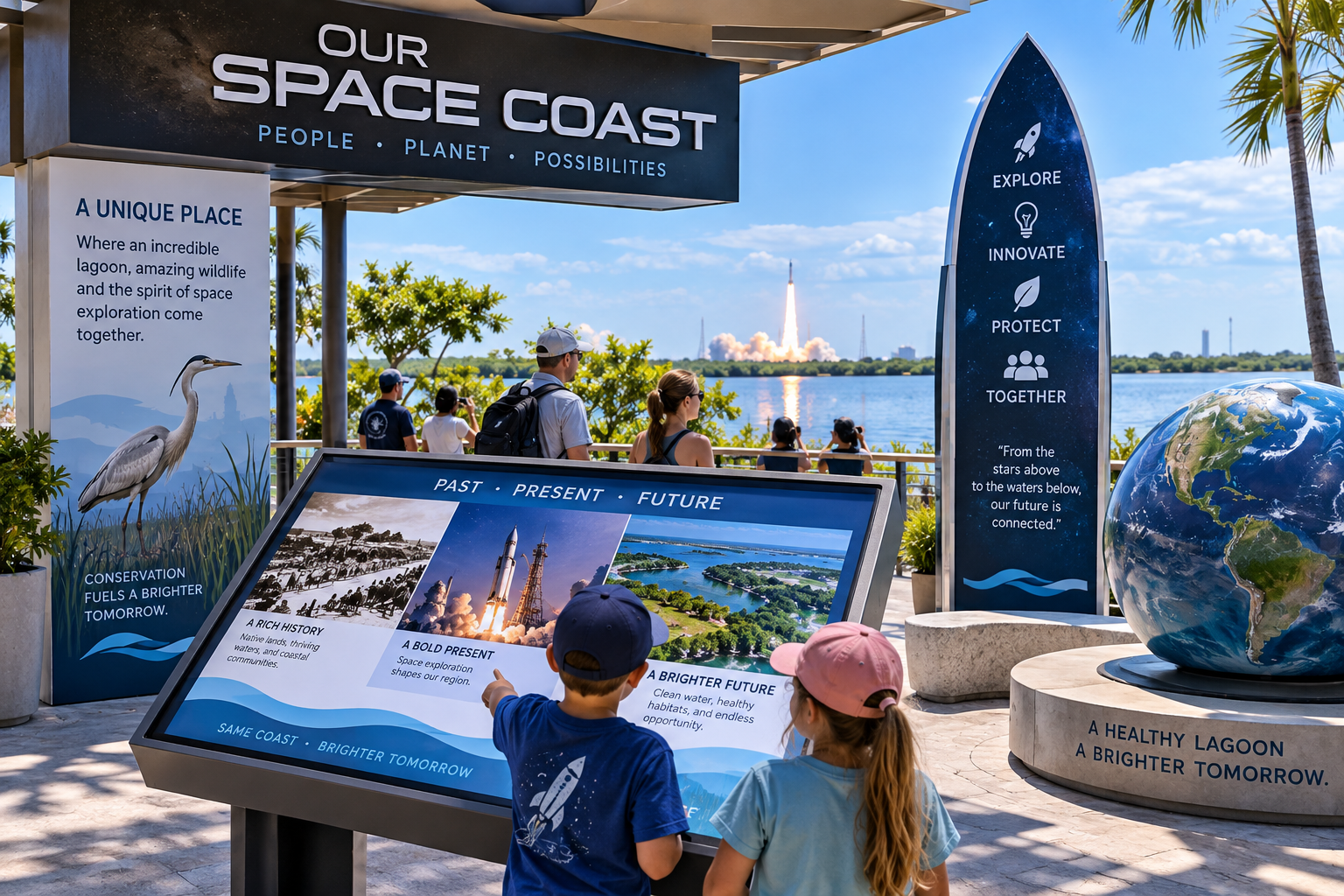
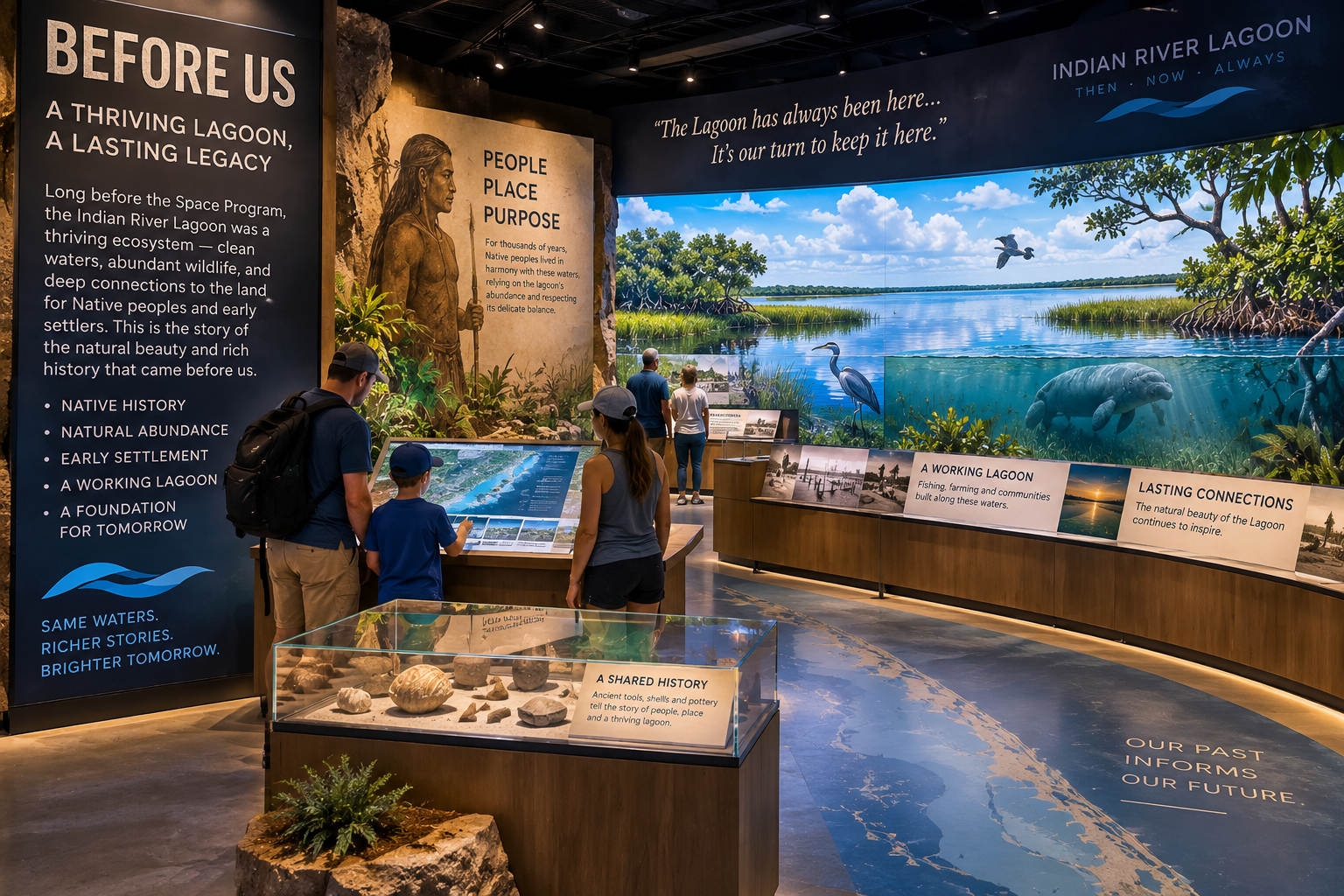
The Lagoon and the Land Before Modern Development.
Explore the natural lagoon, natural Florida landscape, Indigenous history, earliest human relationships with the lagoon, early communities, fishing and maritime life.
Indigenous history must be responsibly researched and should eventually involve appropriate historical and Indigenous expertise rather than making unsupported claims.
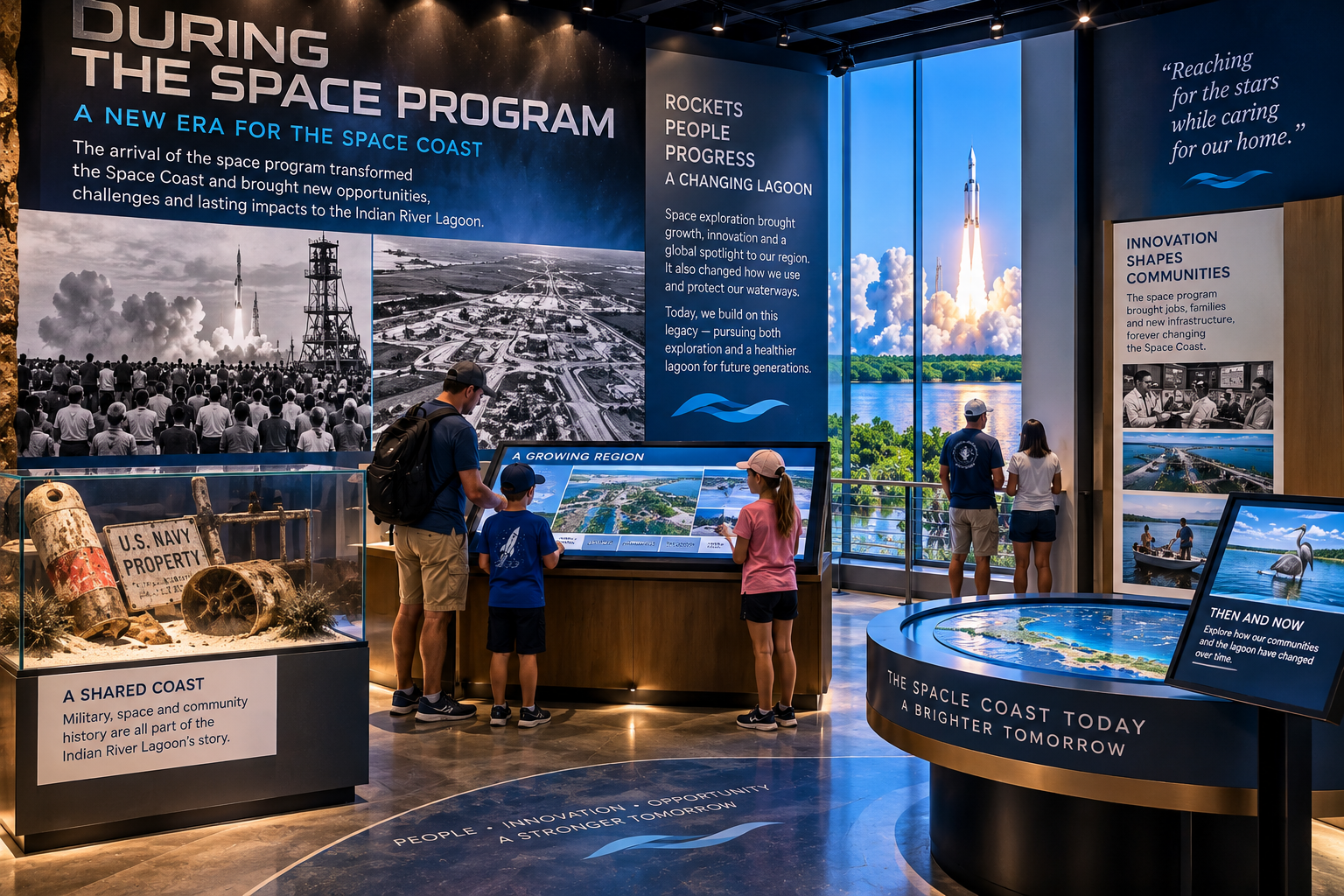
The Families, Workers and Communities That Shaped Brevard.
Explore families, communities, fishing families, agriculture, citrus, local towns, community leaders, workers, businesses, industries, tourism and people whose lives helped shape Brevard. Present growth honestly without creating a simplistic good-versus-bad narrative.
Space Coast Stories
A reviewed collection of photographs, oral histories, memories and historical materials contributed by residents and organizations. All submitted material would require appropriate review before public display. This is not an uncontrolled public publishing system and the archive does not currently exist.
A Major Interactive Experience About Human Modifications to the Lagoon.
Explore canals, locks, dredging, causeways, mosquito-control impoundments, shoreline changes, development, altered water movement and other engineered changes. Use Haulover Canal as an important case study.
Organize case studies around: Why was it built? What benefit did it provide? What did it change? What unintended effects occurred? What did we learn? How can better science inform future decisions?
The Regional Story of a Major Port and Its Coastal Environment.
Tell the regional story of commercial fishing, working waterfront, cargo, maritime commerce, aerospace connections, cruise industry, tourism, recreation, regional growth and the relationship between a major port and the coastal environment.
This is not advertising for Port Canaveral and does not imply Port Canaveral sponsorship or endorsement.
PORT CANAVERAL THROUGH TIME
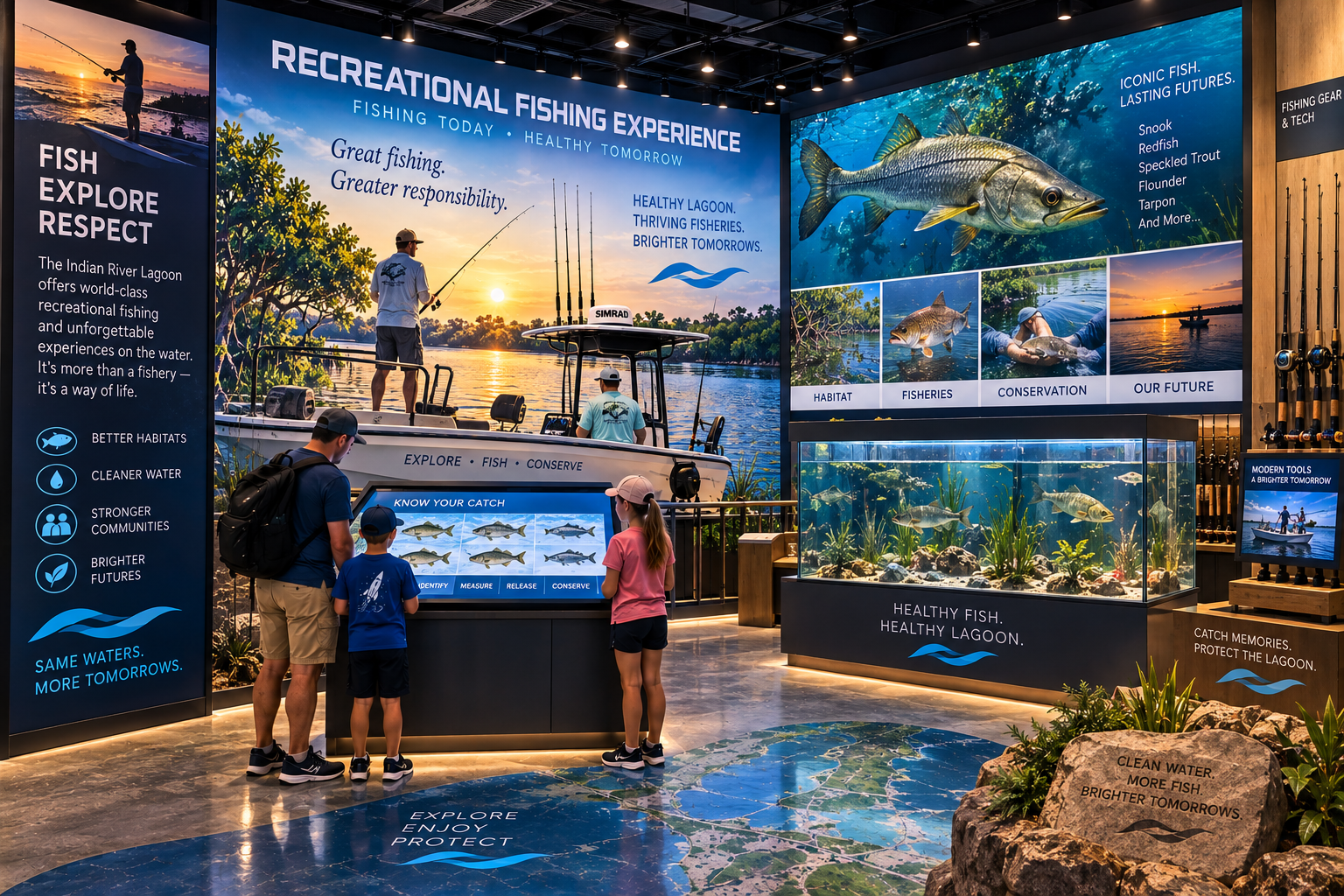
Why the Lagoon Attracts Anglers, Shrimpers, Boaters and Families.
Include recreational fishing and explain the ecology behind important local fisheries. Select a species and explore: Where does it live? What does it eat? What habitat does it need? How does water quality affect it? Why do people come here to catch it?
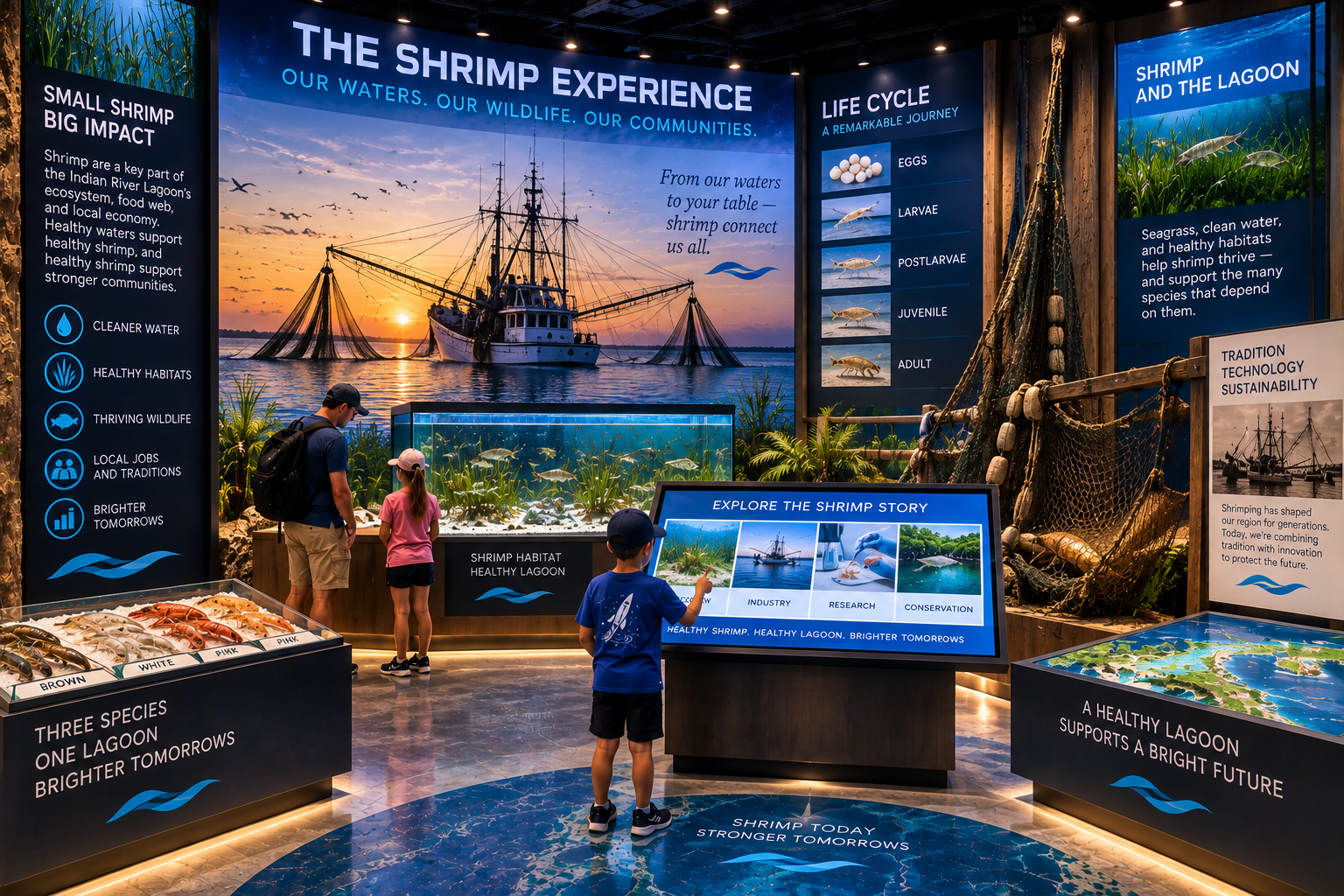
A Memorable Interactive Question About Shrimp Ecology.
Explain shrimp ecology, life cycle, movement and the environmental conditions associated with local recreational shrimping. Consider a simulated digital dip-net or cast-net educational experience.
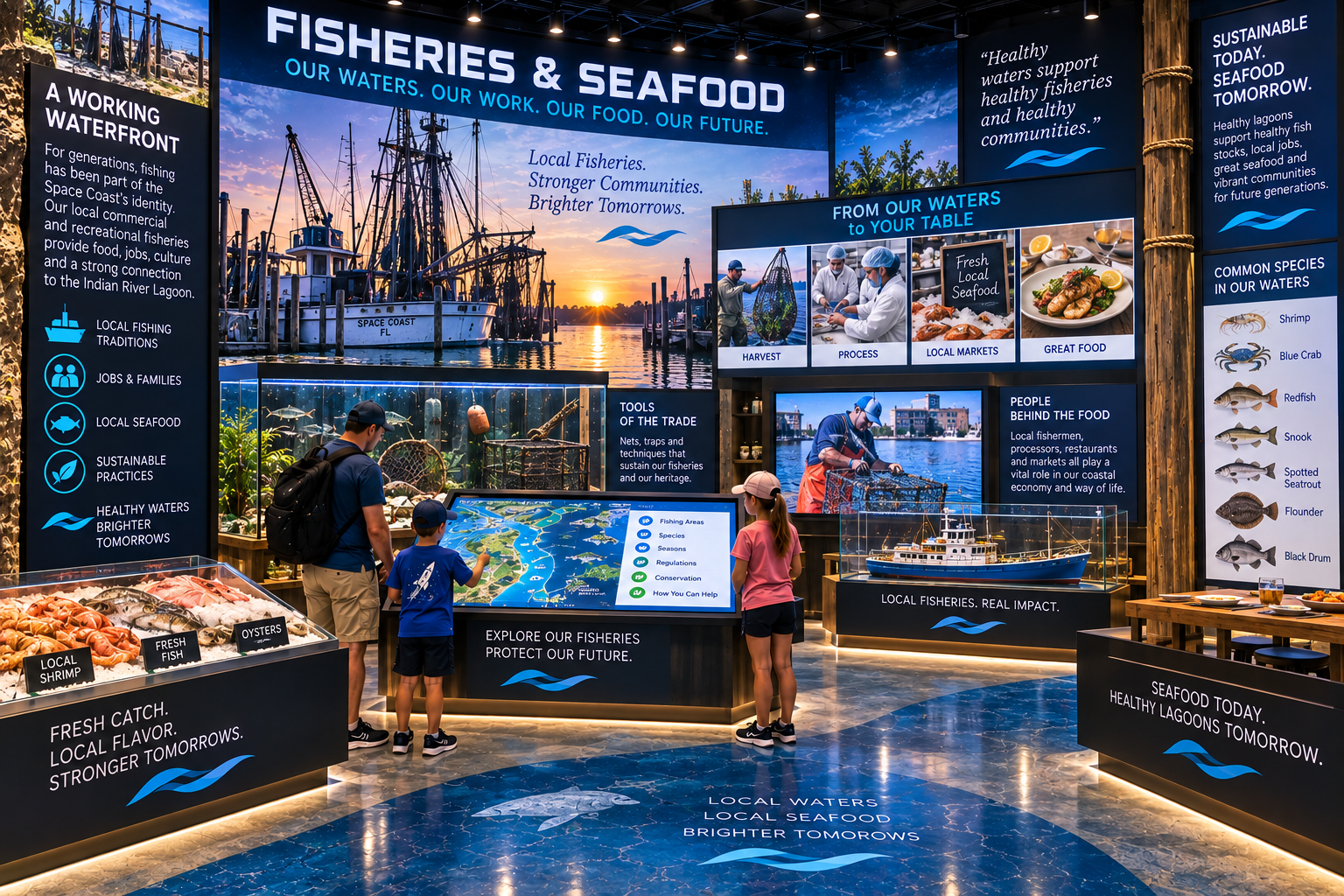
Healthy Water. Healthy Habitat. Healthy Fisheries. Food on Our Table.
Connect commercial fishing, recreational fishing, shrimp, blue crab, stone crab, oysters, clams, shellfish, working waterfronts, local food, healthy habitats and healthy fisheries.
Commercial and Recreational Crabbing on the Lagoon.
Include both commercial and recreational crabbing. Explain blue crab, stone crab, commercial crabbers, recreational crabbing, how traps work, why traps are used, the importance of fisheries to local culture and economy, and how lagoon health affects fisheries. Use verified and current official data for changing numbers rather than hard-coding unsupported statistics.
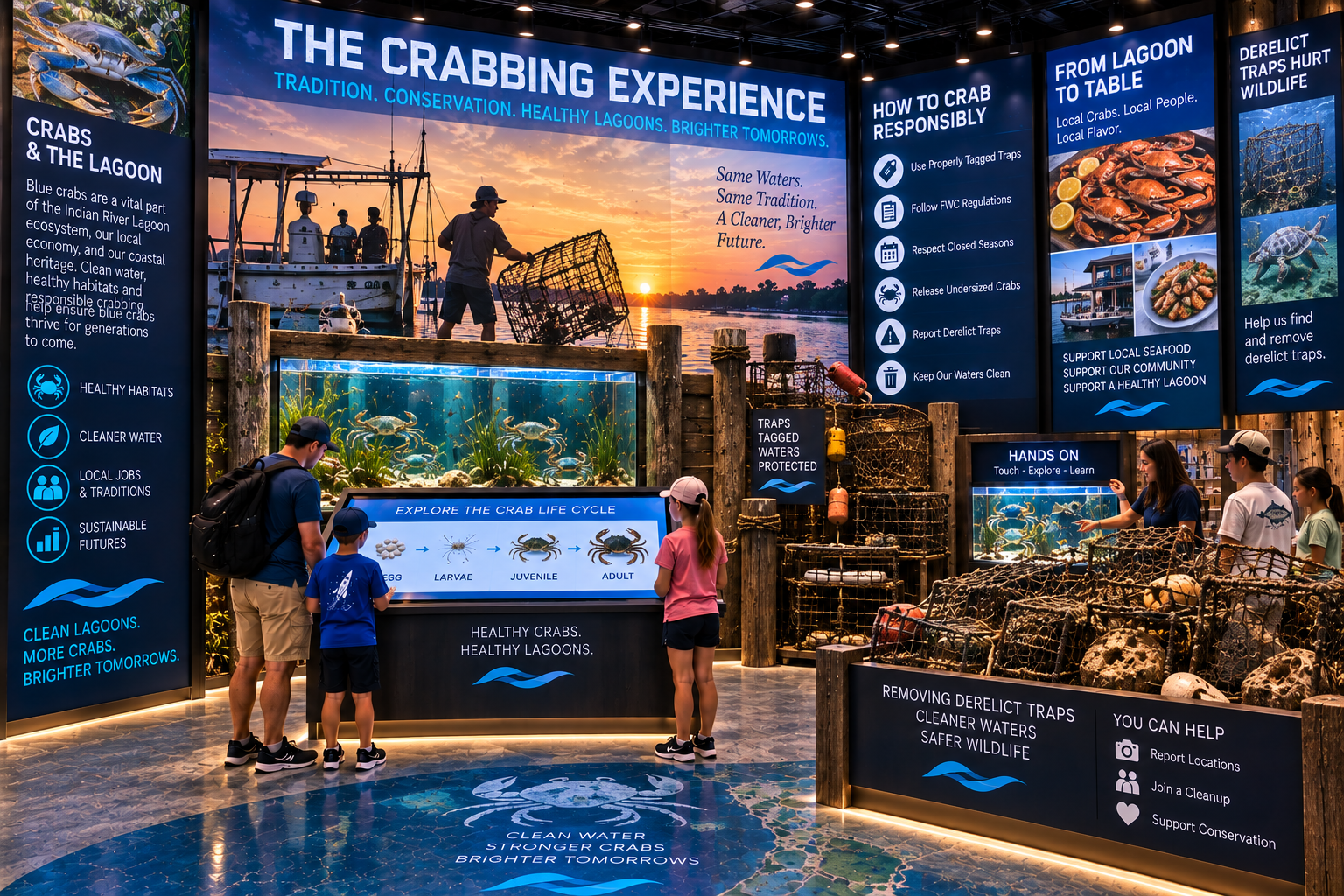
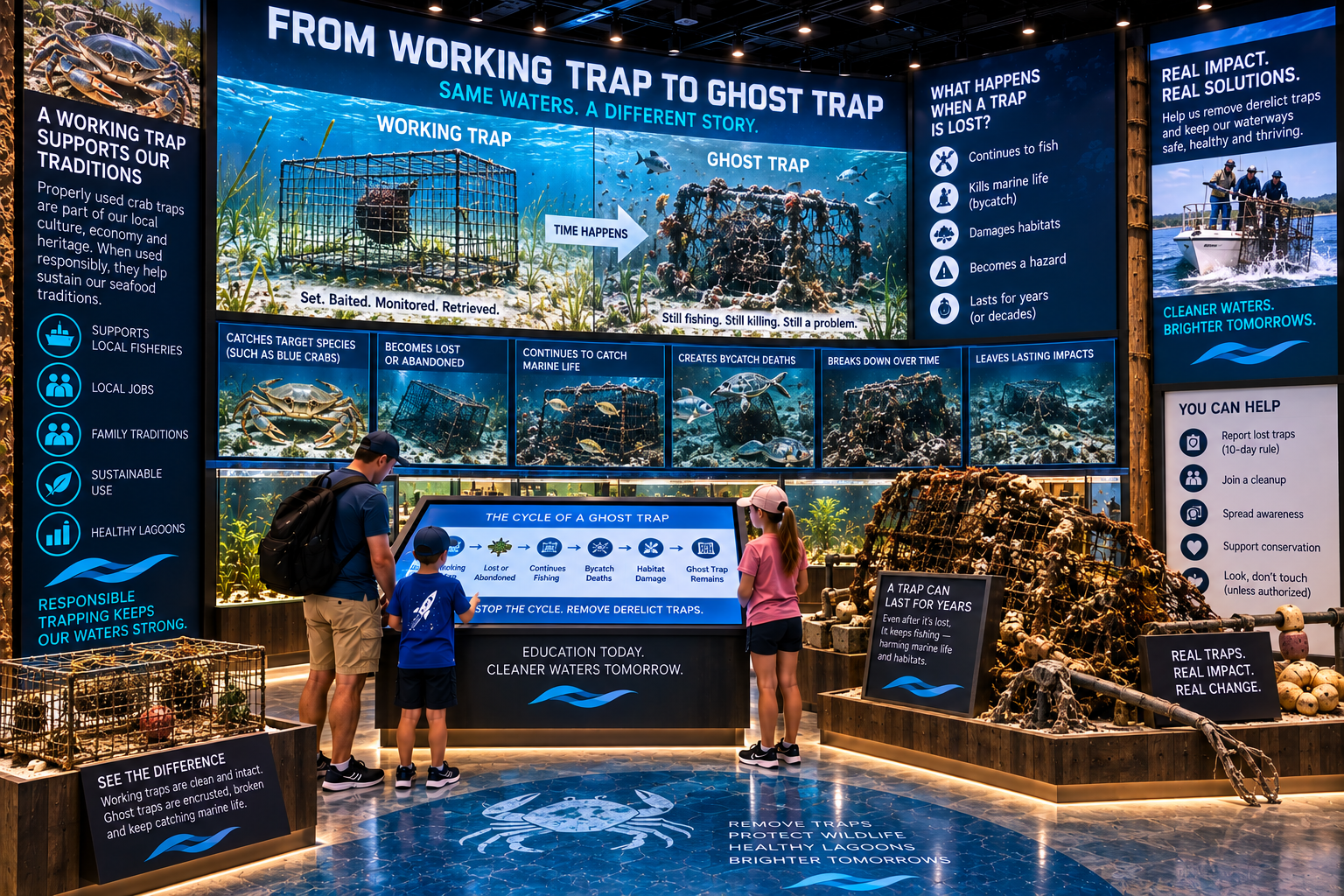
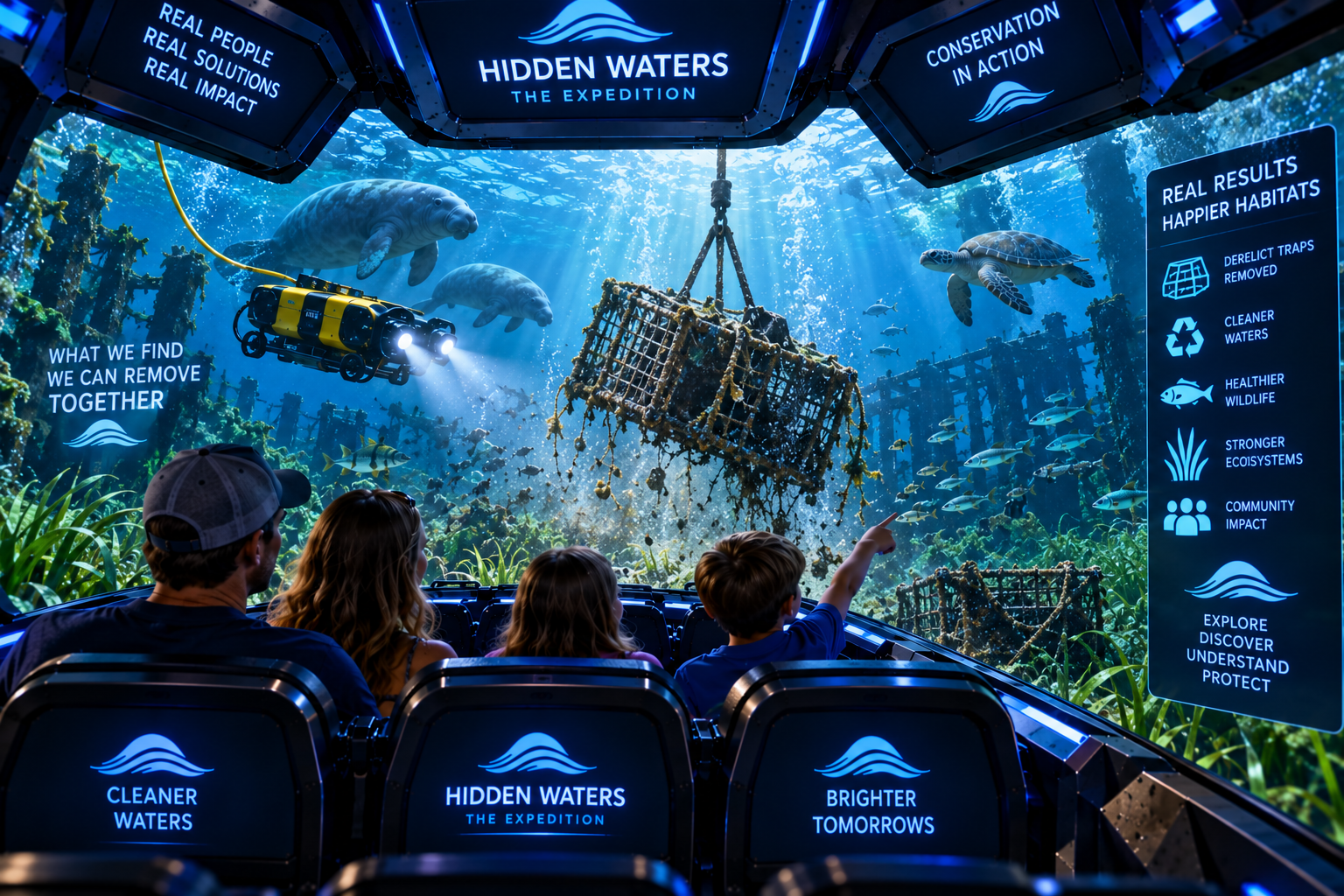
When a Working Trap Becomes a Ghost Trap.
Show the progression: Working trap → lost or displaced gear → derelict gear → potential continued capture, habitat or navigation impact → authorized recovery.
Make clear that crabbers are not being portrayed as the problem. Teach boaters to recognize trap floats and lines, avoid running over them when safely possible, never assume a trap is abandoned, never remove or disturb traps without proper authority, and use appropriate reporting processes.
Choose Your Educational Depth.
Use the existing SCWS educational ecosystem to introduce fish, birds, mammals, reptiles, plants, mangroves, seagrass, wetlands, oysters, clams, habitats, invasive species, water quality and ecological relationships. Allow visitors to choose educational depth and connect deeper exploration to Percy's Conservation Academy and the Center's educational system.
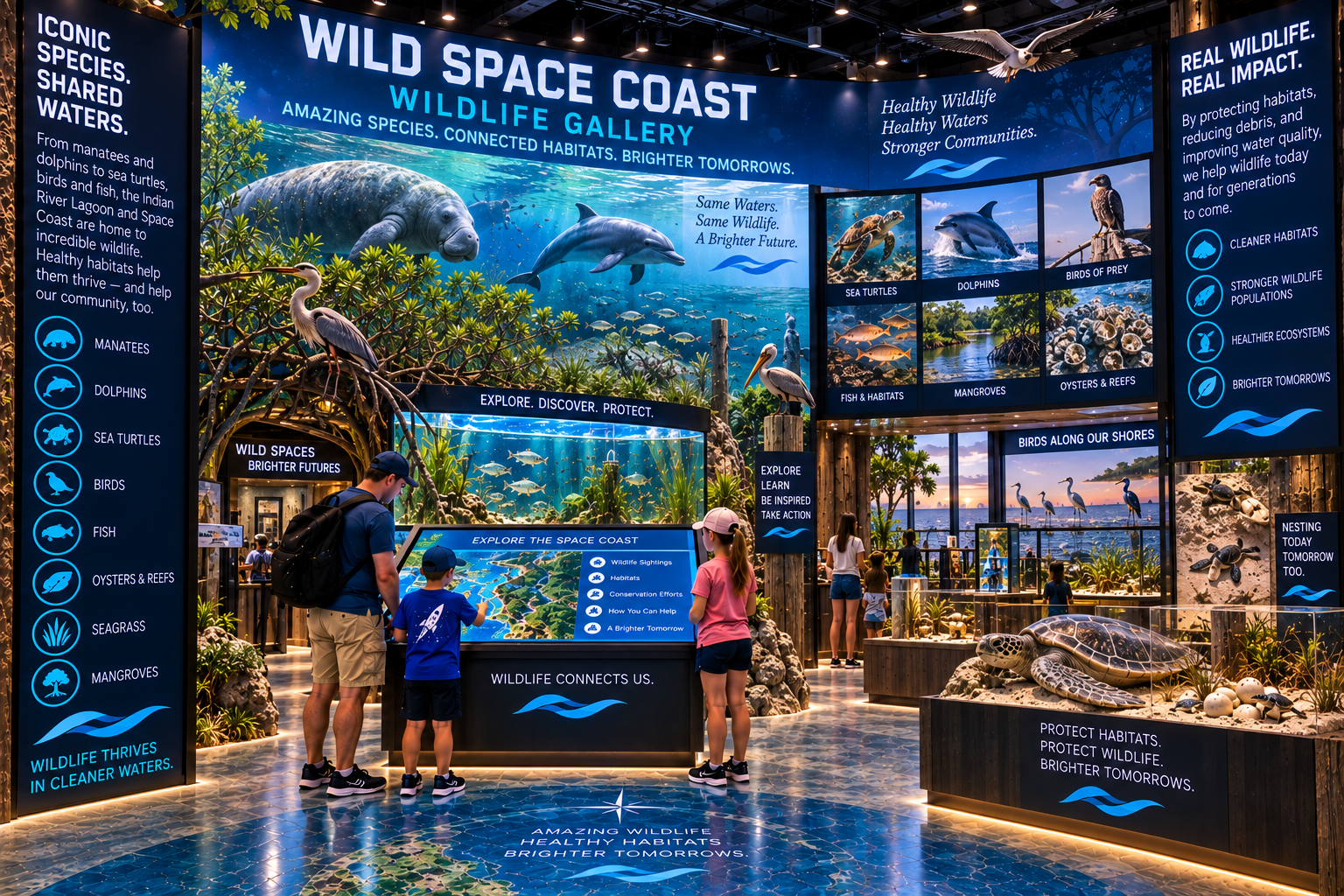
WHO ARE YOU?
WHAT DO YOU WANT TO EXPLORE?
The physical exhibit provides concise interactive learning and directs interested visitors toward deeper digital learning through Percy's Conservation Academy and other Center educational resources. Designed for children AND adults.
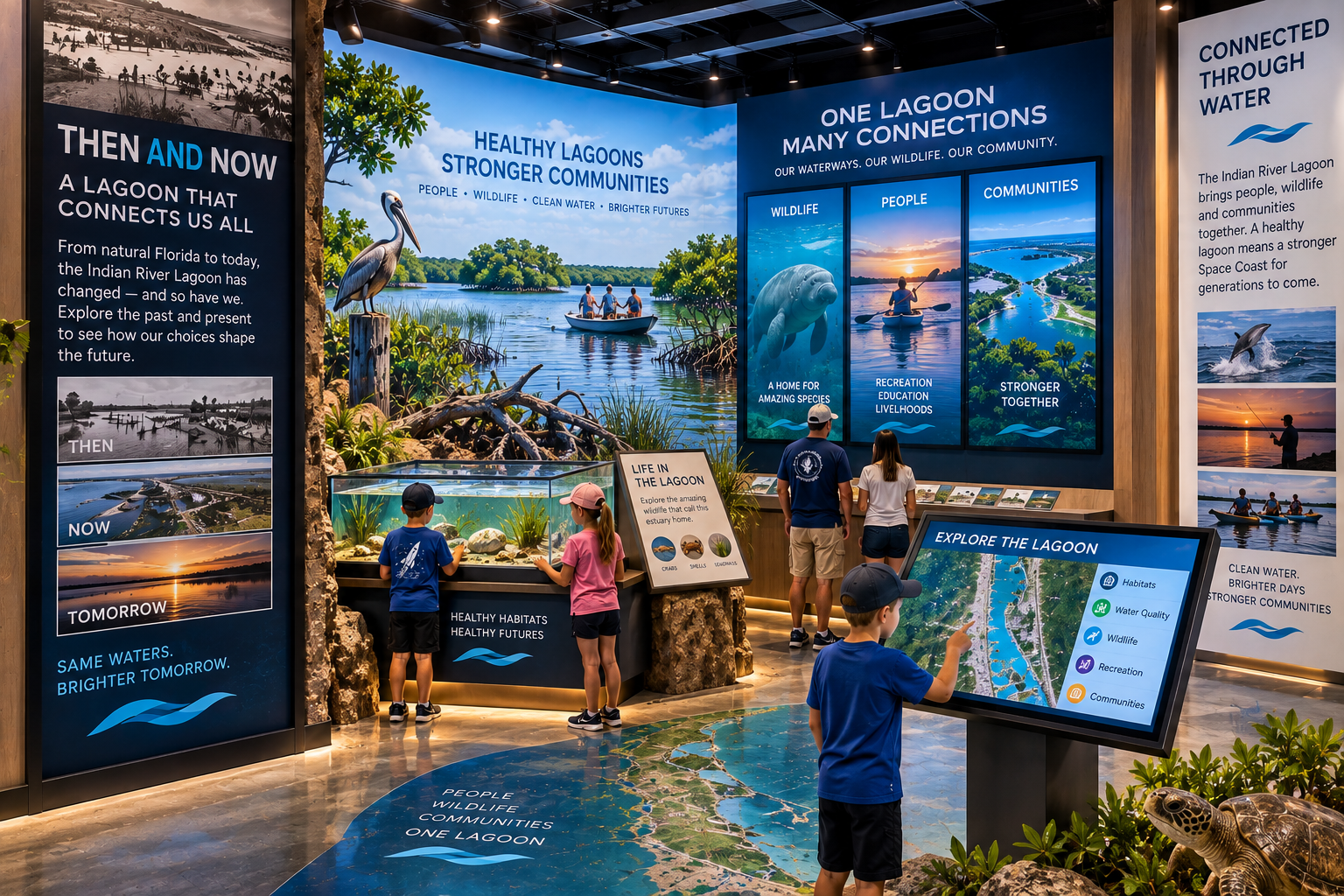
Bringing People, Growth, Waterways, Wildlife and Change Together.
The final portion of the gallery brings together people, growth, waterways, wildlife, industry, fisheries, environmental change and conservation — then directs visitors toward Currents Through Time and the Living Lagoon Monitor where environmental change can be explored through data and evidence.
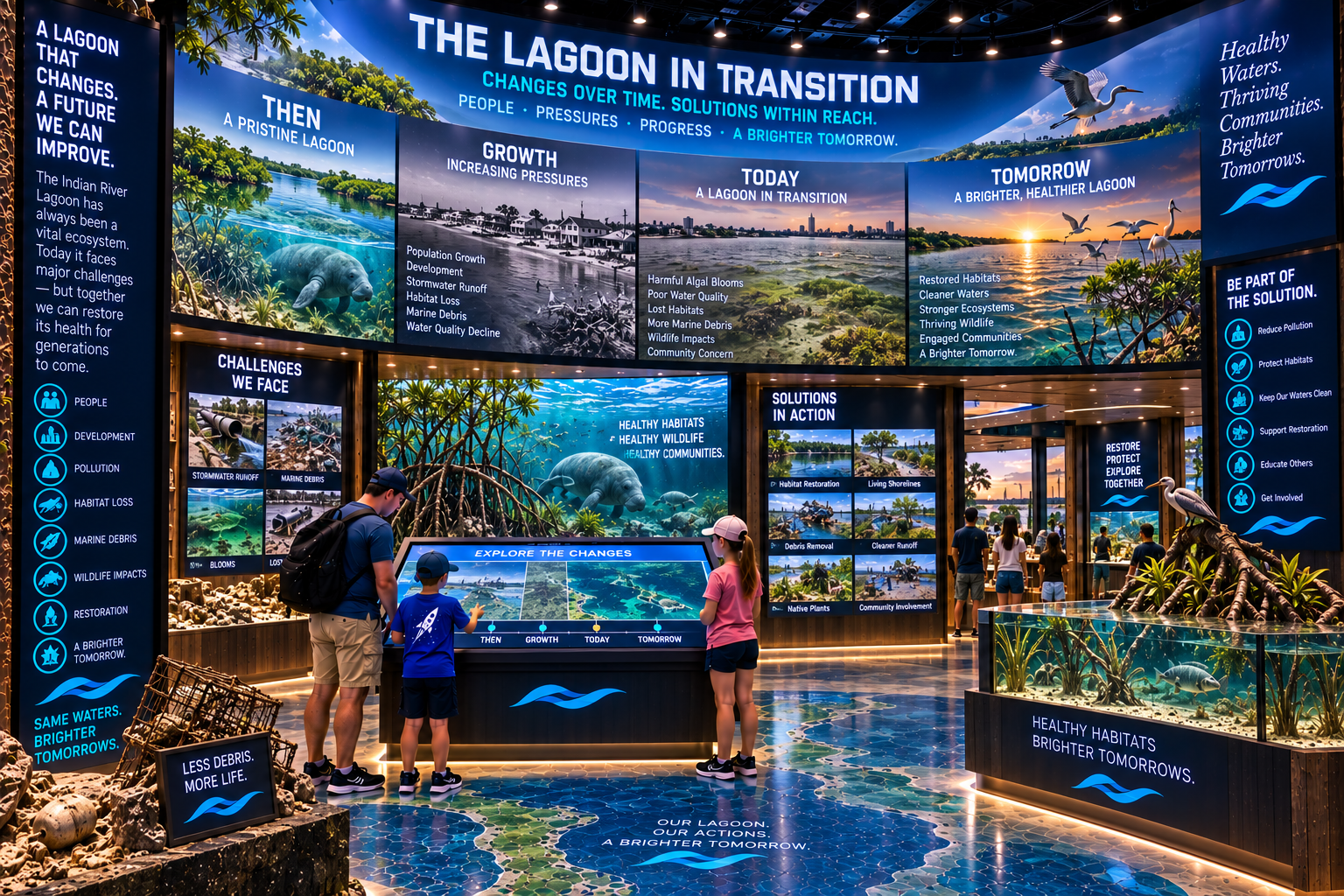
Ten Story Zones. One Interconnected Region.
Our Space Coast complements but does not duplicate the Space Coast Through Time Tower. The Tower primarily tells the vertical Space Coast and aerospace story. Our Space Coast tells the deeper story of people, communities, wildlife and cultural relationships with the water.
Before Us
Natural lagoon, natural Florida landscape, Indigenous history, earliest human relationships with the lagoon, early communities, fishing and maritime life.
People Who Built the Space Coast
Families, communities, fishing families, agriculture, citrus, local towns, community leaders, workers, businesses, industries, tourism and people whose lives helped shape Brevard. Includes a potential future Space Coast Stories community-history feature.
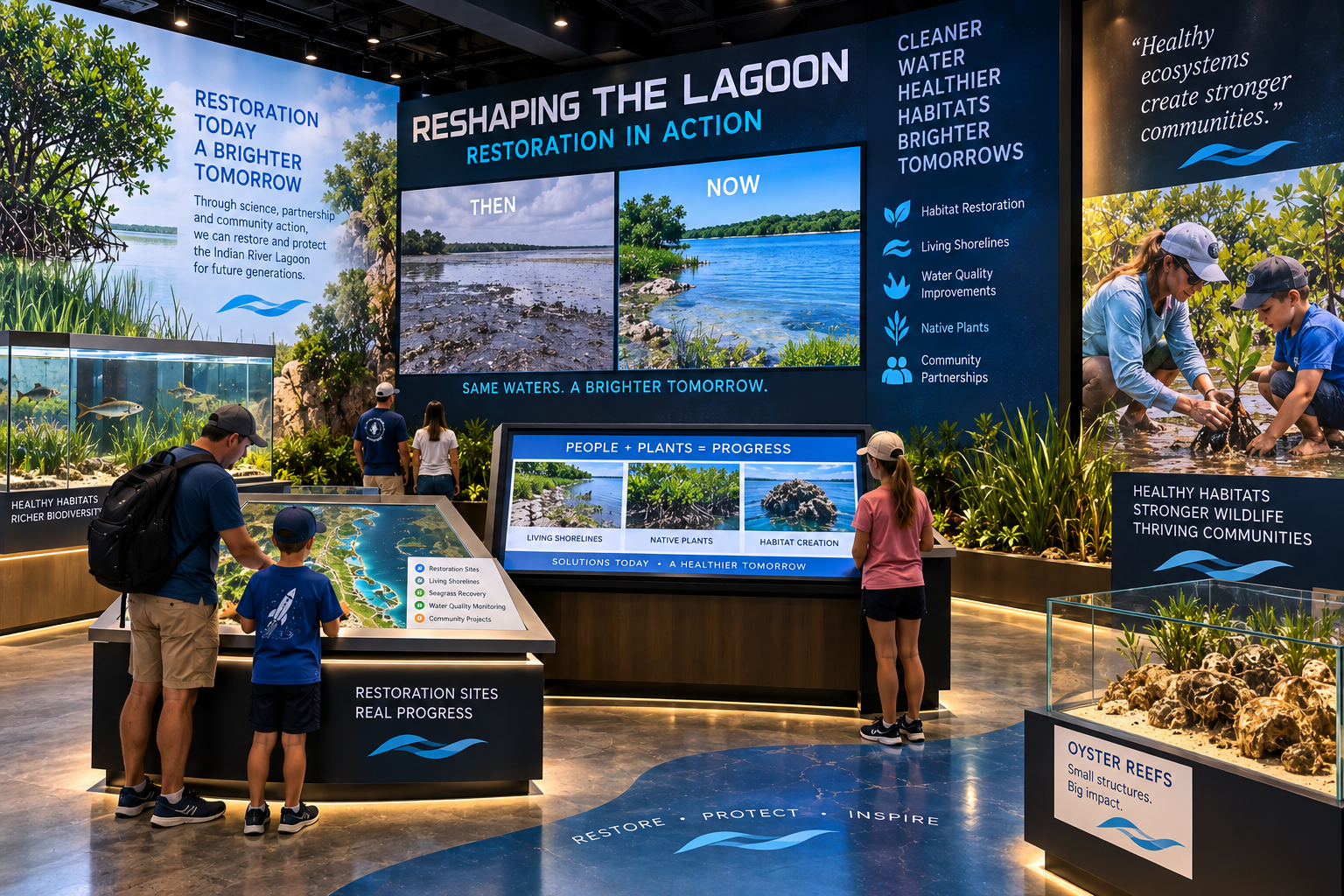
Reshaping the Lagoon
A major interactive experience about human modifications to the lagoon — canals, locks, dredging, causeways, mosquito-control impoundments, shoreline changes and altered water movement. Haulover Canal case study.
Port Canaveral: Gateway to the World
Commercial fishing, working waterfront, cargo, maritime commerce, aerospace connections, cruise industry, tourism, recreation and the relationship between a major port and the coastal environment.
Why We Come to the Water
The cultural and ecological story of why the Indian River Lagoon attracts anglers, shrimpers, boaters and families — including recreational fishing and the ecology behind important local fisheries.
Why Do the Shrimp Run?
Shrimp ecology, life cycle, movement, environmental conditions and local recreational shrimping culture — including a potential simulated digital dip-net experience.
From the Lagoon to Our Table
Commercial fishing, recreational fishing, shrimp, blue crab, stone crab, oysters, clams, shellfish, working waterfronts, local food and healthy habitats.
Crabbing & Working Waterfronts
Commercial and recreational crabbing, blue crab, stone crab, traps, working crabbers and the connection between fisheries and Lagoon health. Includes derelict-trap education.
Wild Space Coast
Fish, birds, mammals, reptiles, plants, mangroves, seagrass, wetlands, oysters, clams, habitats, invasive species, water quality and ecological relationships. Interactive learning for all ages.
A Lagoon in Transition
The final portion of the gallery brings together people, growth, waterways, wildlife, industry, fisheries, environmental change and conservation — then directs visitors toward Currents Through Time and the Living Lagoon Monitor.
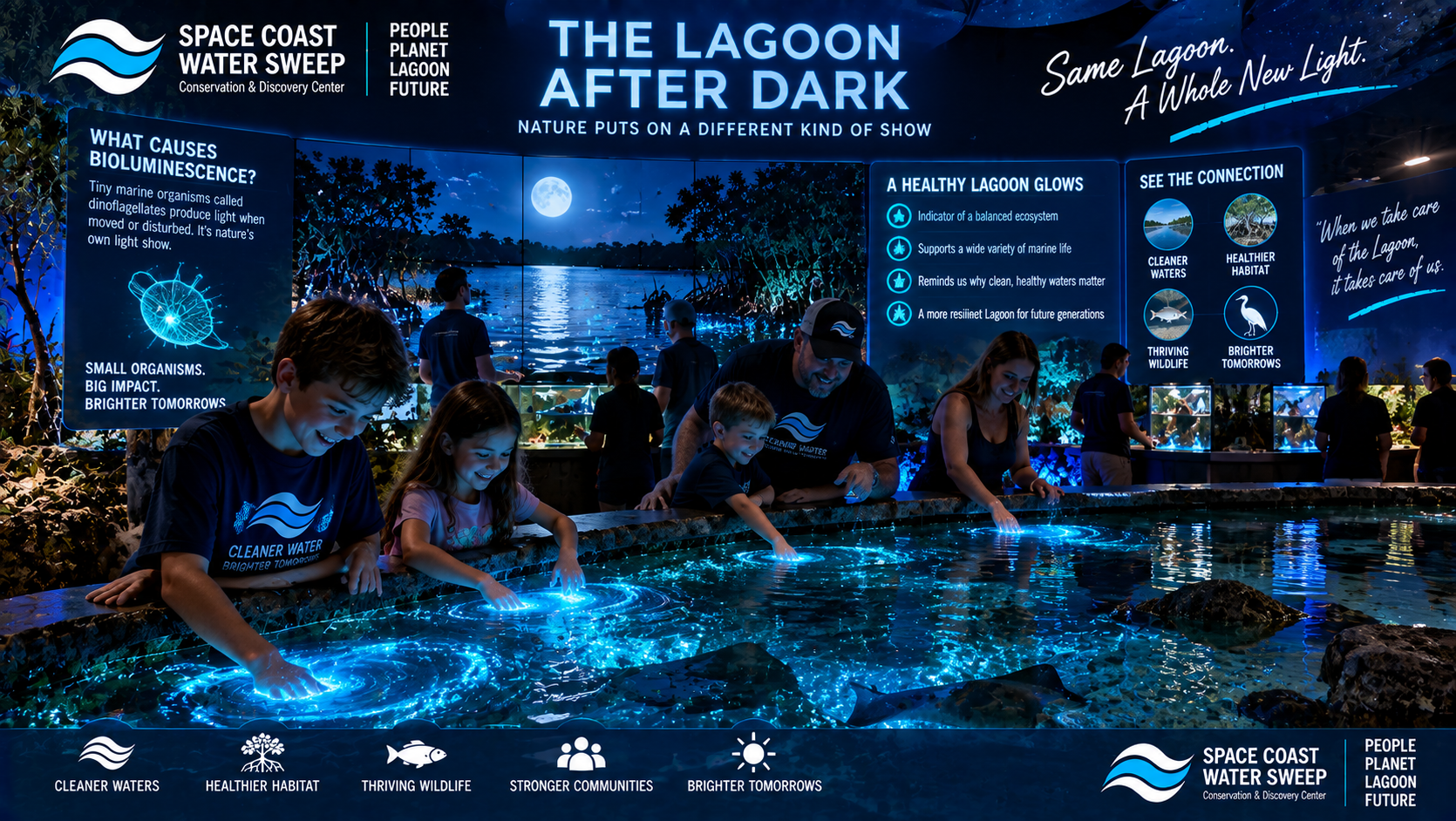
What If You Could Make the Lagoon Glow in the Middle of the Day?
The Lagoon After Dark is a proposed indoor controlled bioluminescence experience inspired by seasonal bioluminescence in the Indian River Lagoon. Visitors may learn about dinoflagellates, comb jellies, seasonality, water conditions and ecology — and interact with a controlled shallow lagoon-style system where movement creates visible glowing trails.
Direct-contact interaction is subject to biological, public-health, engineering, animal-welfare, environmental and operational feasibility. Natural bioluminescence in the Indian River Lagoon is seasonal and conditional — not a year-round guarantee.
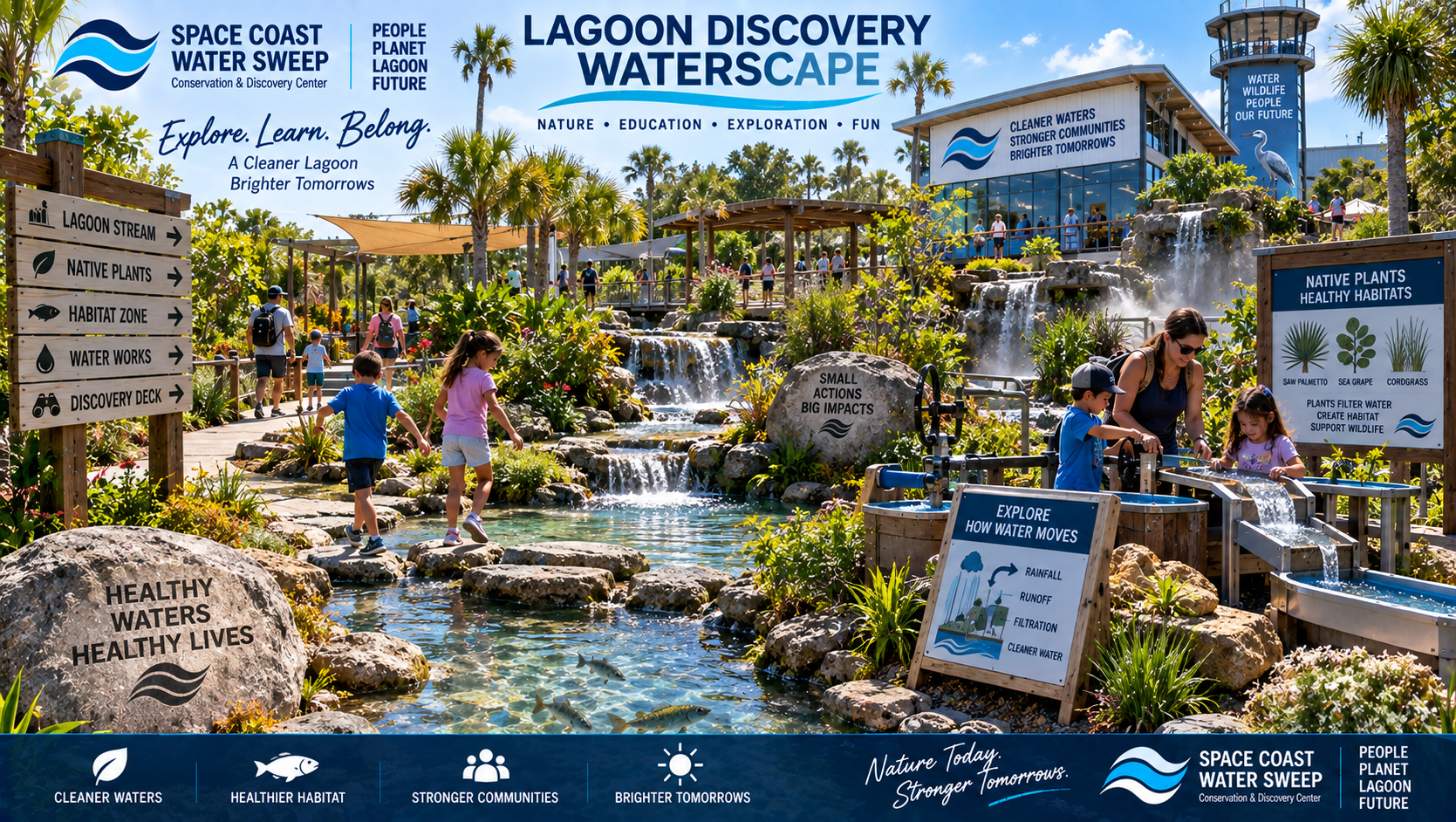
Follow a Drop of Water From Rainfall to the Lagoon.
The proposed Lagoon Discovery Waterscape is an environmentally themed outdoor water experience designed to combine cooling, play, exploration and education. It is not a splash pad and not a swimming pool.
All public-contact water features would require appropriate treatment, engineering, health/safety systems and approvals. Visitors do not interact with untreated Lagoon or stormwater.
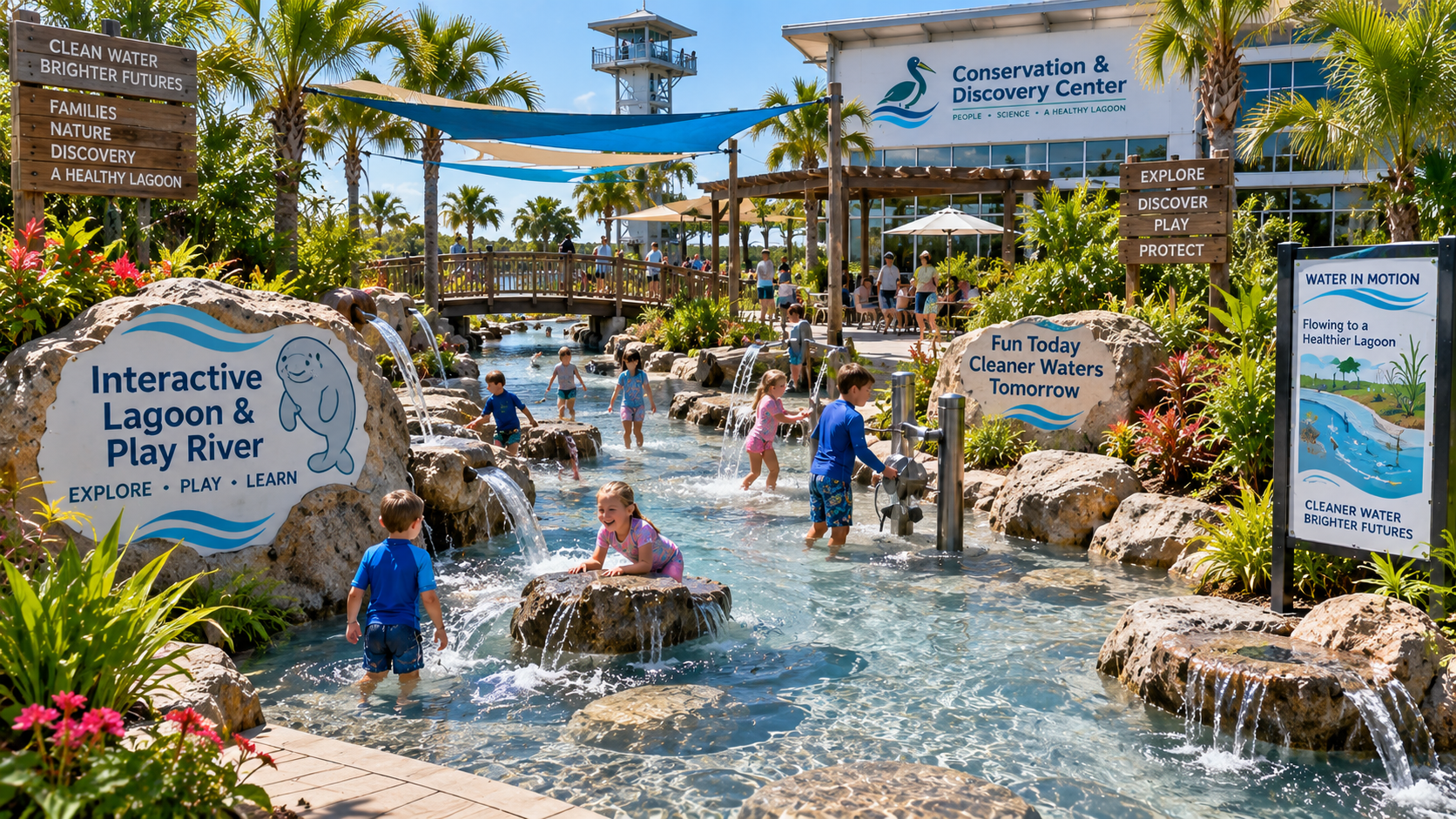
A Recreational Water Experience for Families.
The Interactive Lagoon & Play River is a conceptual recreational and interactive water experience distinct from the educational Waterscape. Where the Waterscape teaches the water cycle, the Interactive Lagoon & Play River is about experiencing water — subject to final engineering, treatment and safety design.
This concept is separate from the Living Lagoon (which is a habitat observation experience, not a contact experience) and from the Waterscape (which is an educational water-flow experience). All public-contact water features require appropriate treatment, engineering, health/safety systems and approvals.
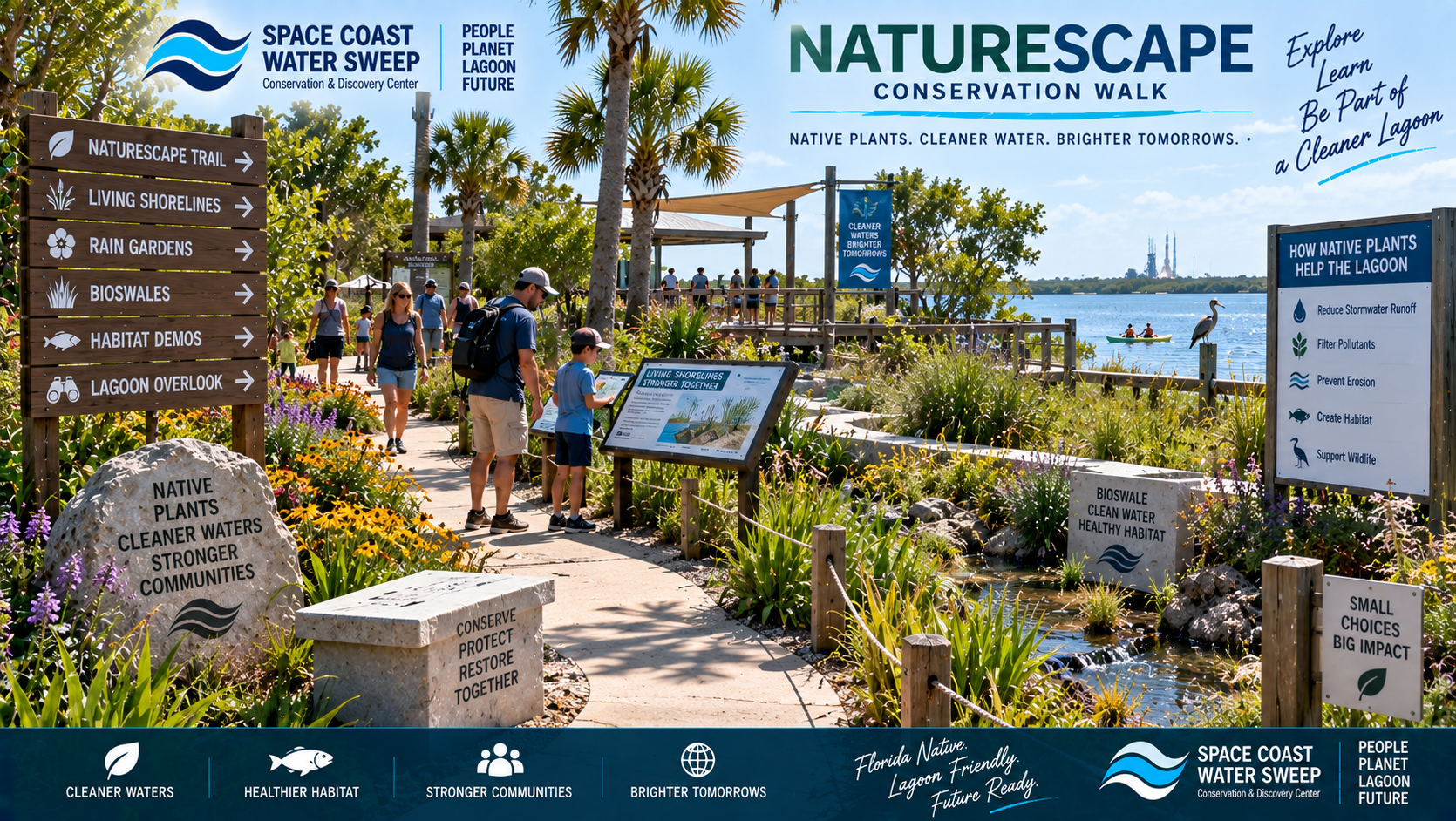
The Landscape Itself Can Teach Conservation.
NatureScape and the Conservation Walk invite visitors to learn by moving through the property. The landscape also makes the Center a pleasant place to visit even when someone is not attending a formal program.
The Best Way to Understand the Lagoon May Be to Get Out on It.
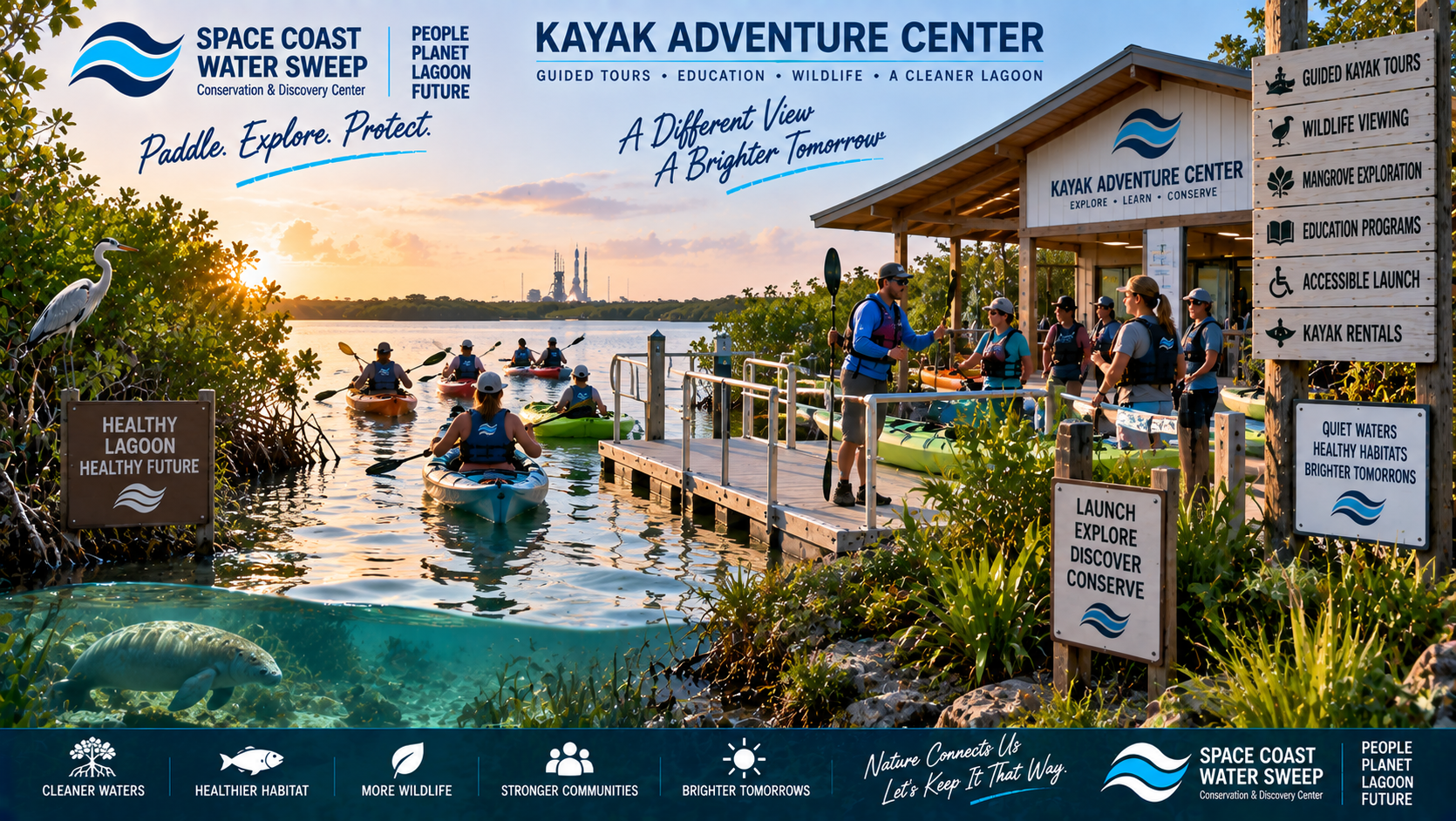
The proposed Kayak Adventure Center provides a dedicated launch separated from larger working vessel docks.
Bioluminescence is not guaranteed. Wildlife sightings cannot be promised.
DAY TOURS
Lagoon ecology, wildlife, mangroves, living shorelines, restoration, water quality, Project Lagoon interpretation, research-focused paddles.
EVENING / NIGHT TOURS
Sunset, nocturnal wildlife, astronomy / Space Coast interpretation where appropriate, seasonal bioluminescence when natural conditions support it.
PUBLIC / FREE KAYAK ACCESS
The Center concept may include a public kayak launch providing free paddle access to the water — separate from the commercial guided kayak operation. Visitors would not need to purchase a guided experience merely to launch. Final location, operating rules, access arrangements and site configuration remain dependent on property/site planning and approvals.
PAID GUIDED KAYAK EXPERIENCES
Guided kayak experiences may be offered as a separate visitor experience, potentially through an appropriate commercial/operator arrangement. This paid program does not replace the public/free access concept, and the public launch is not automatically part of the commercial guided-kayak concession.
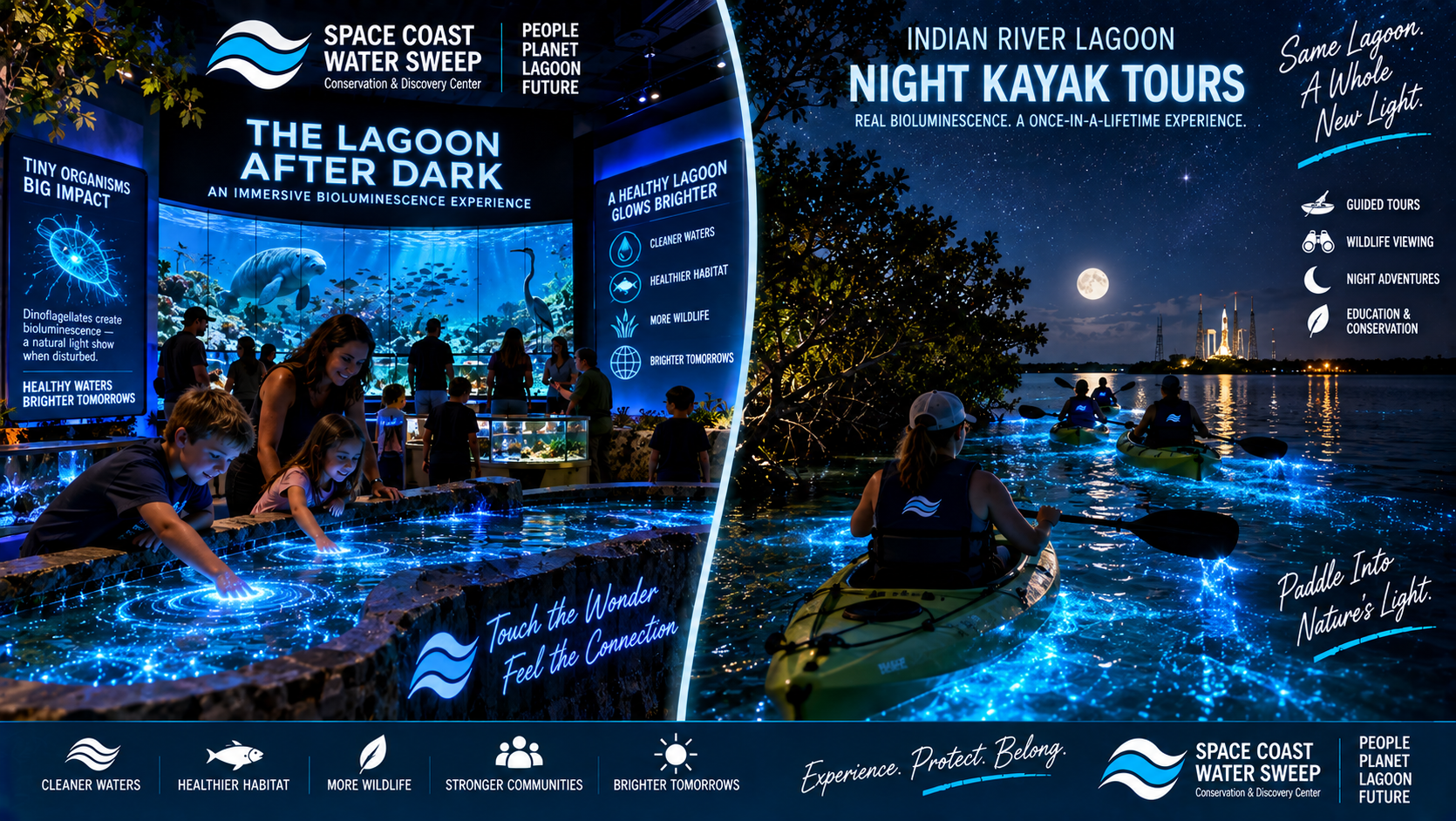
See It Inside. Experience It Outside.
Inside, visitors can learn the science of bioluminescence in a controlled setting. Outside, when natural conditions support it, guided evening paddles may allow visitors to experience the real Lagoon after dark.
Natural bioluminescence is not promised.
Controlled. Educational. Available as designed.
Natural. Seasonal. Different every night.
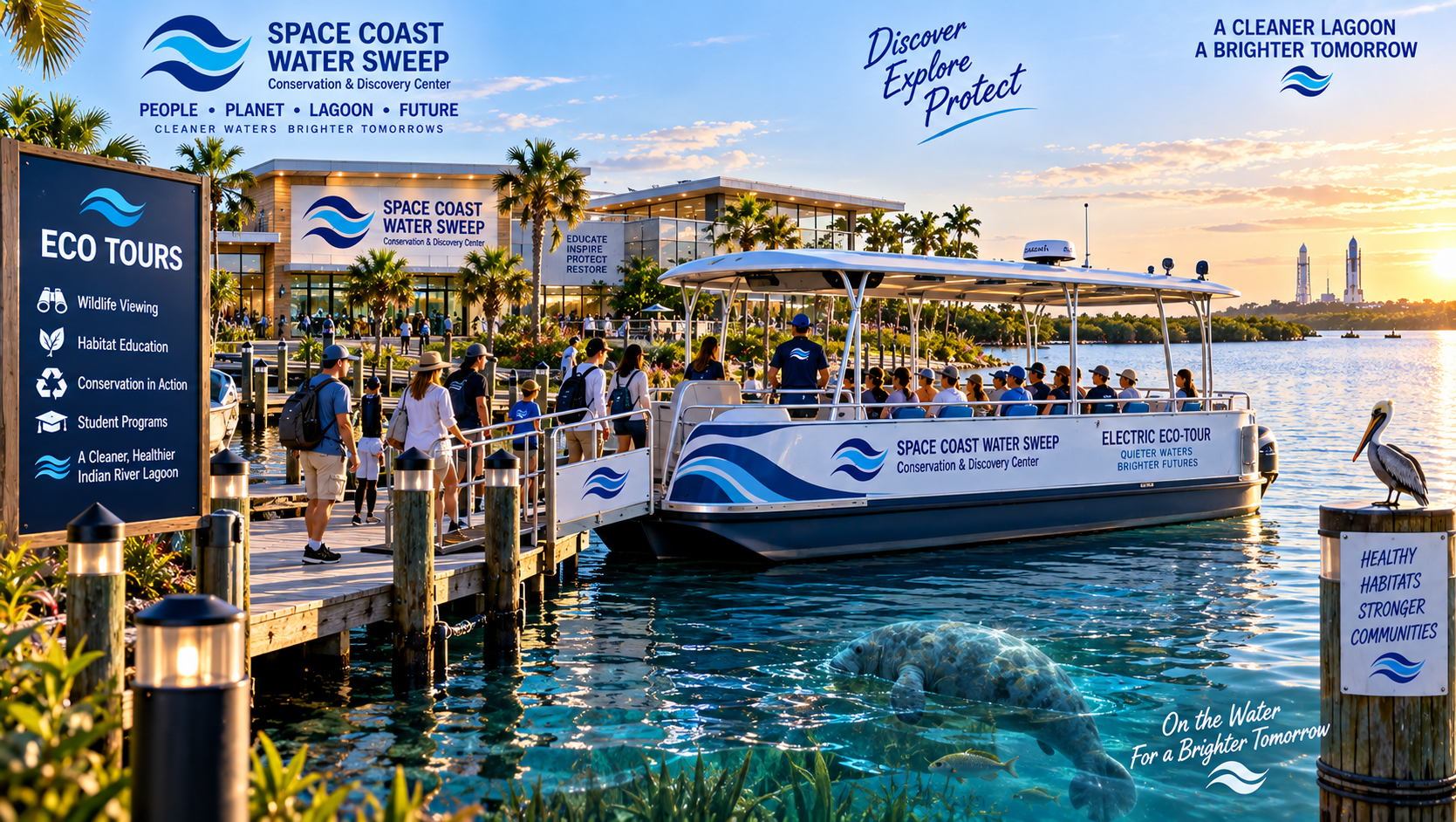
Some Stories Are Best Told From the Water.
The long-term vision may support a future larger eco-education / eco-tour vessel designed for approximately 40 passengers, subject to final design, USCG requirements and operating model.
Specific vessel size is not final. No vessel has been purchased.
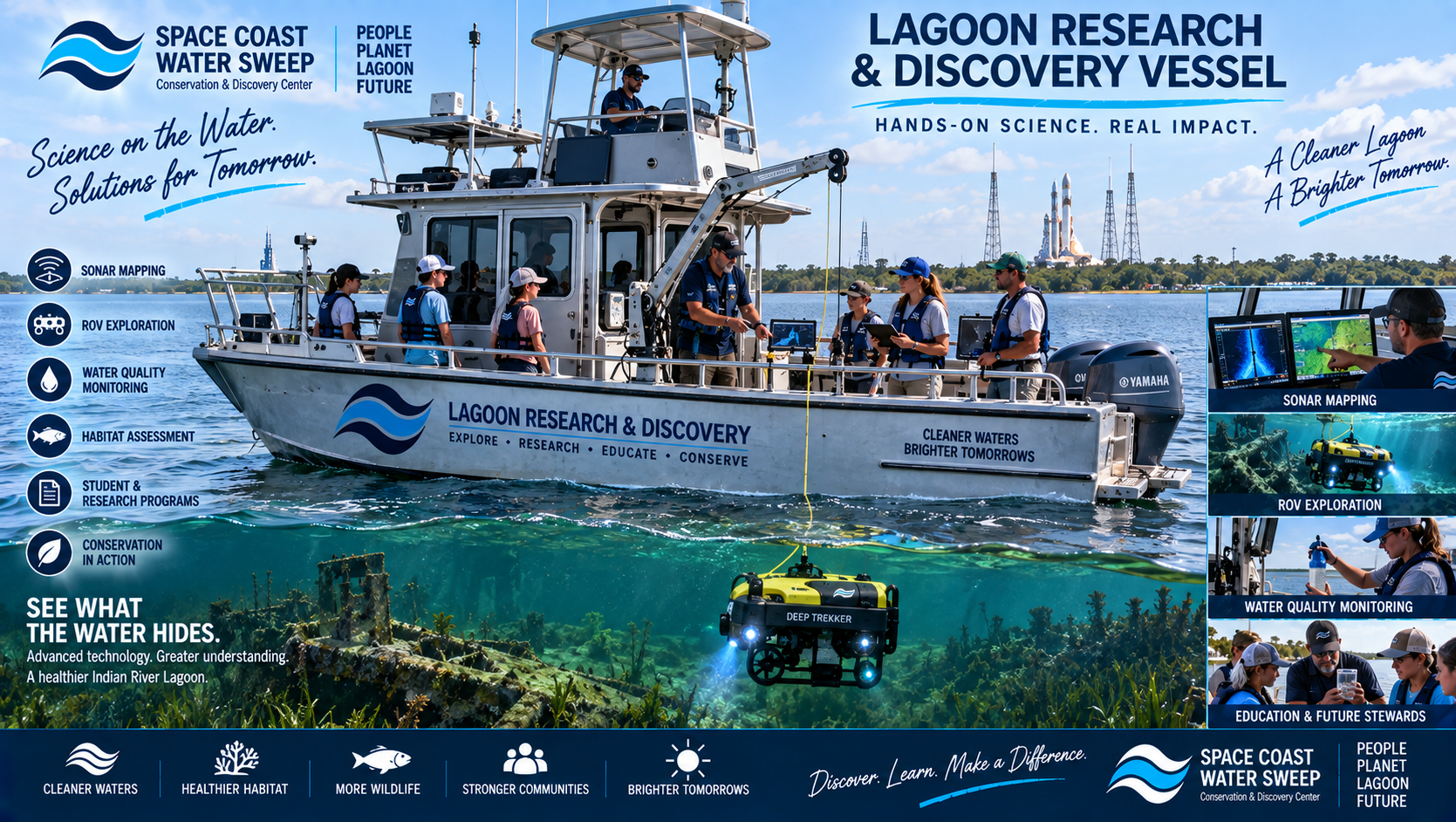
What If Your Tour Felt More Like Joining a Field Team?
The Lagoon Research & Discovery Vessel is a smaller dedicated vessel separate from the larger eco-tour boat — designed for approximately 6 guests plus appropriate crew, subject to vessel selection and applicable USCG requirements.
Passengers do not perform unsafe recovery operations.
The Lagoon Is Part of a Much Bigger View.
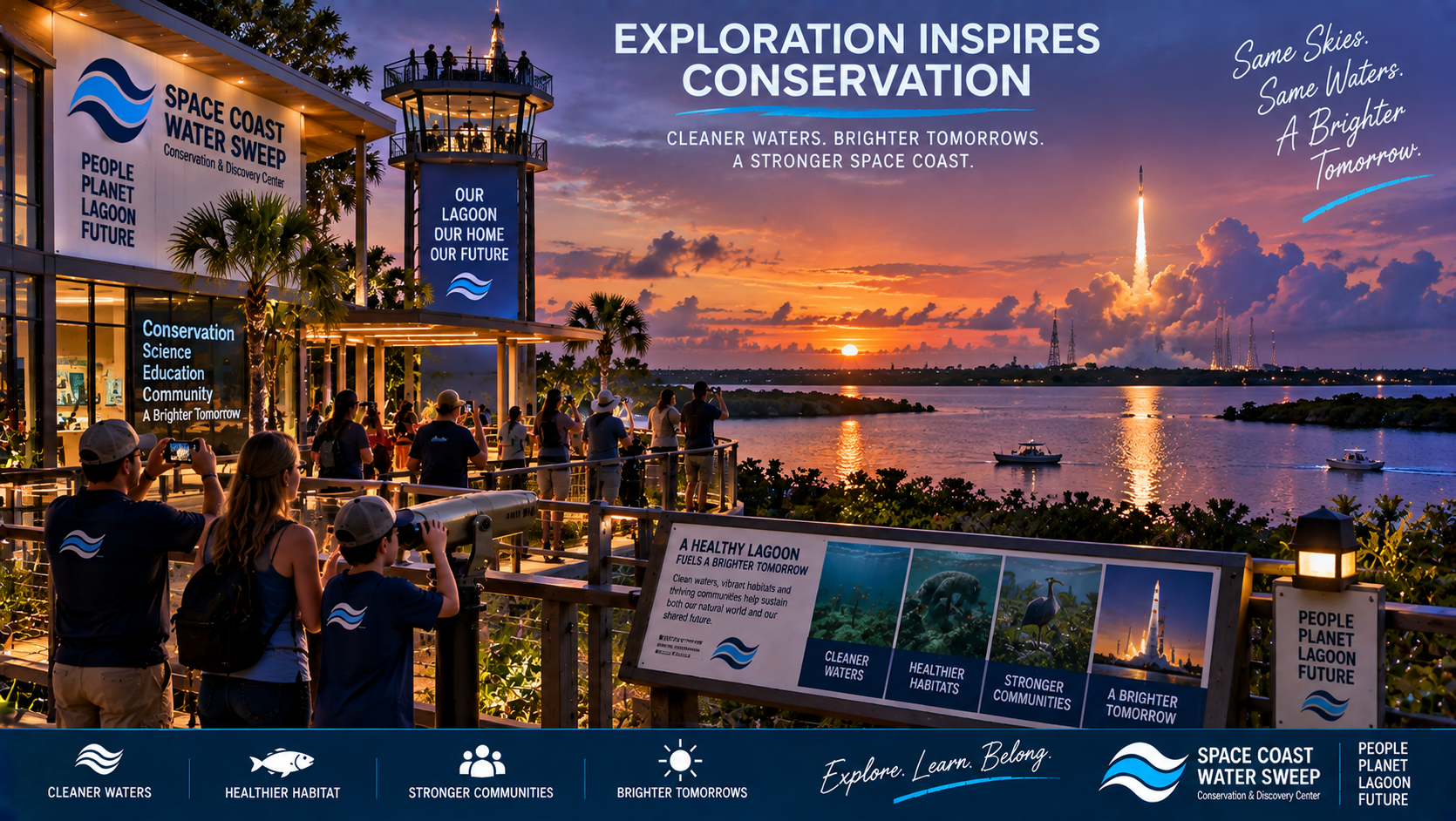
The Center can celebrate its Space Coast setting without turning the project into a space attraction. Where location and sightlines permit, future opportunities may include launch viewing, waterfront observation, astronomy, evening programs and educational connections between Earth observation and conservation.
An observation point or tower may be possible if site planning, permitting and economics support it. Rocket visibility cannot be promised from an unknown future property.
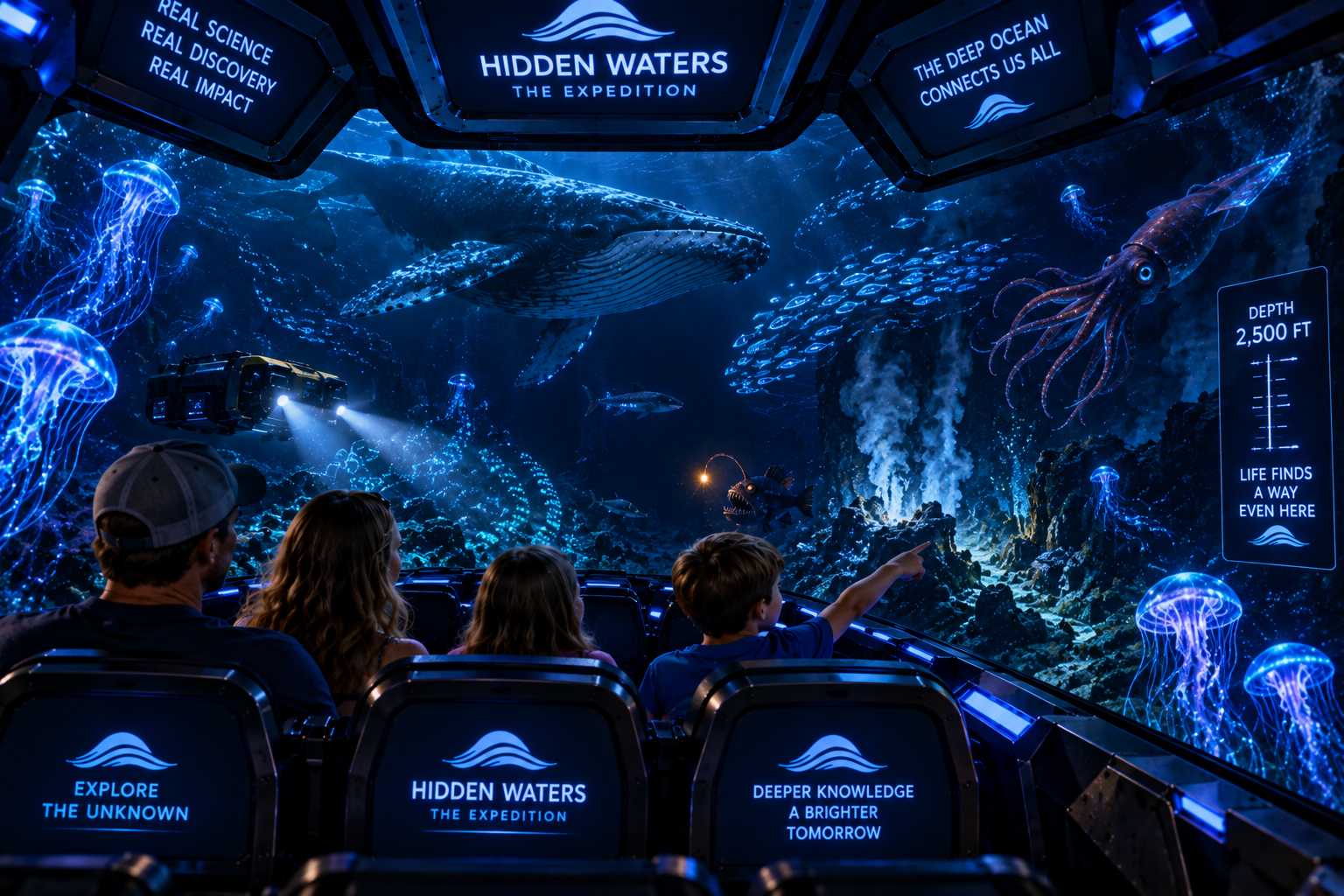
Don't Just Tell the Story. Let Them Travel Through It.
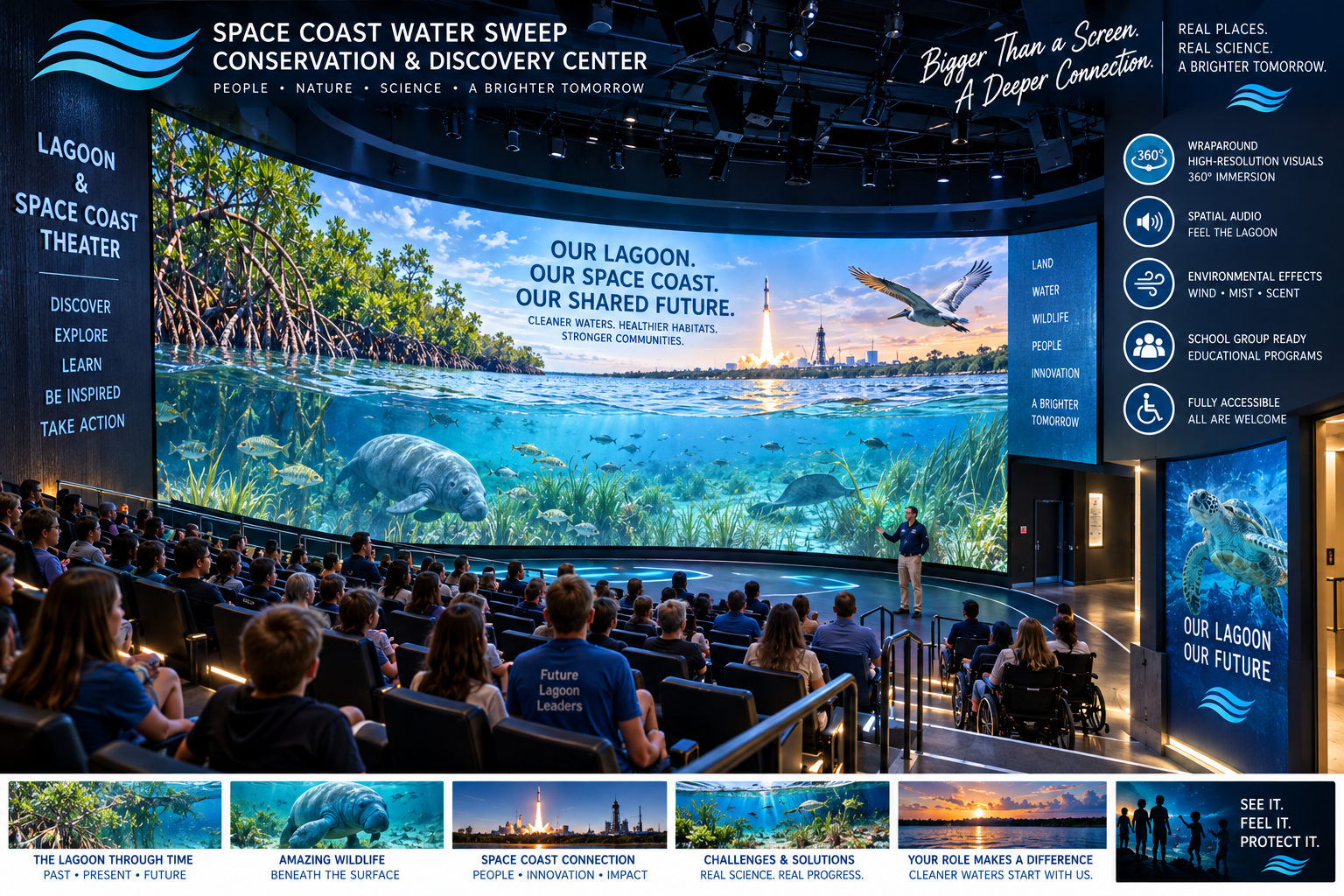
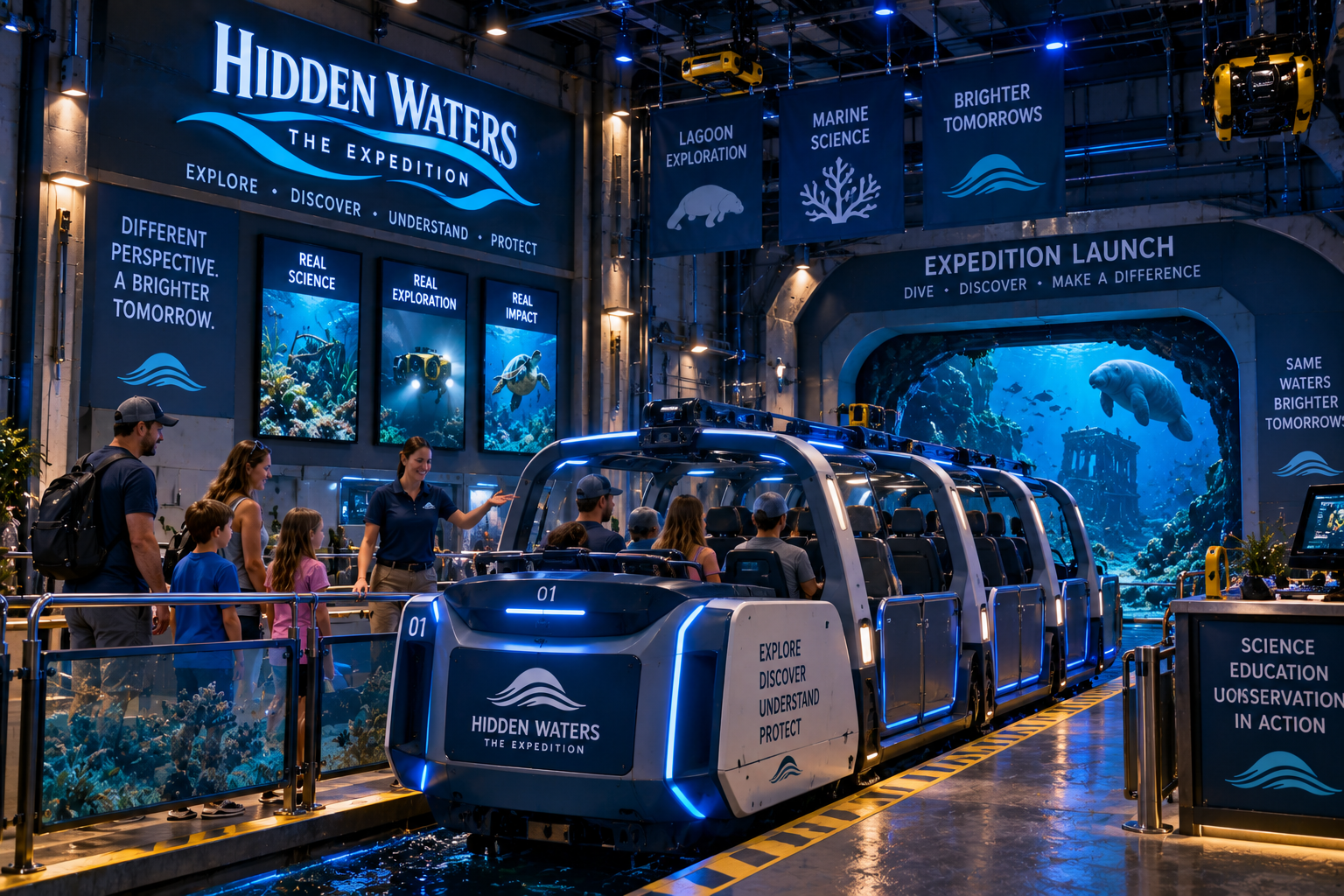
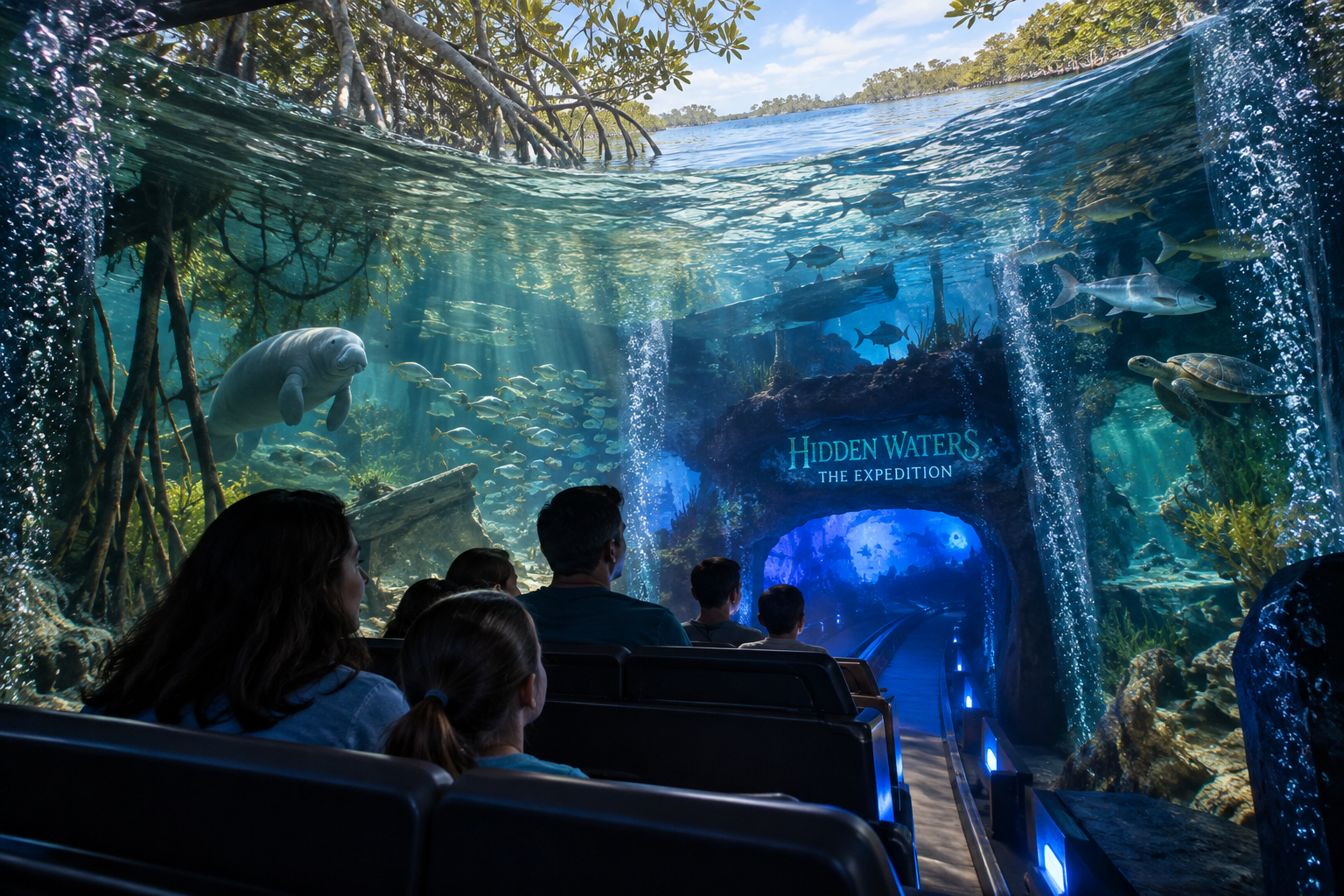
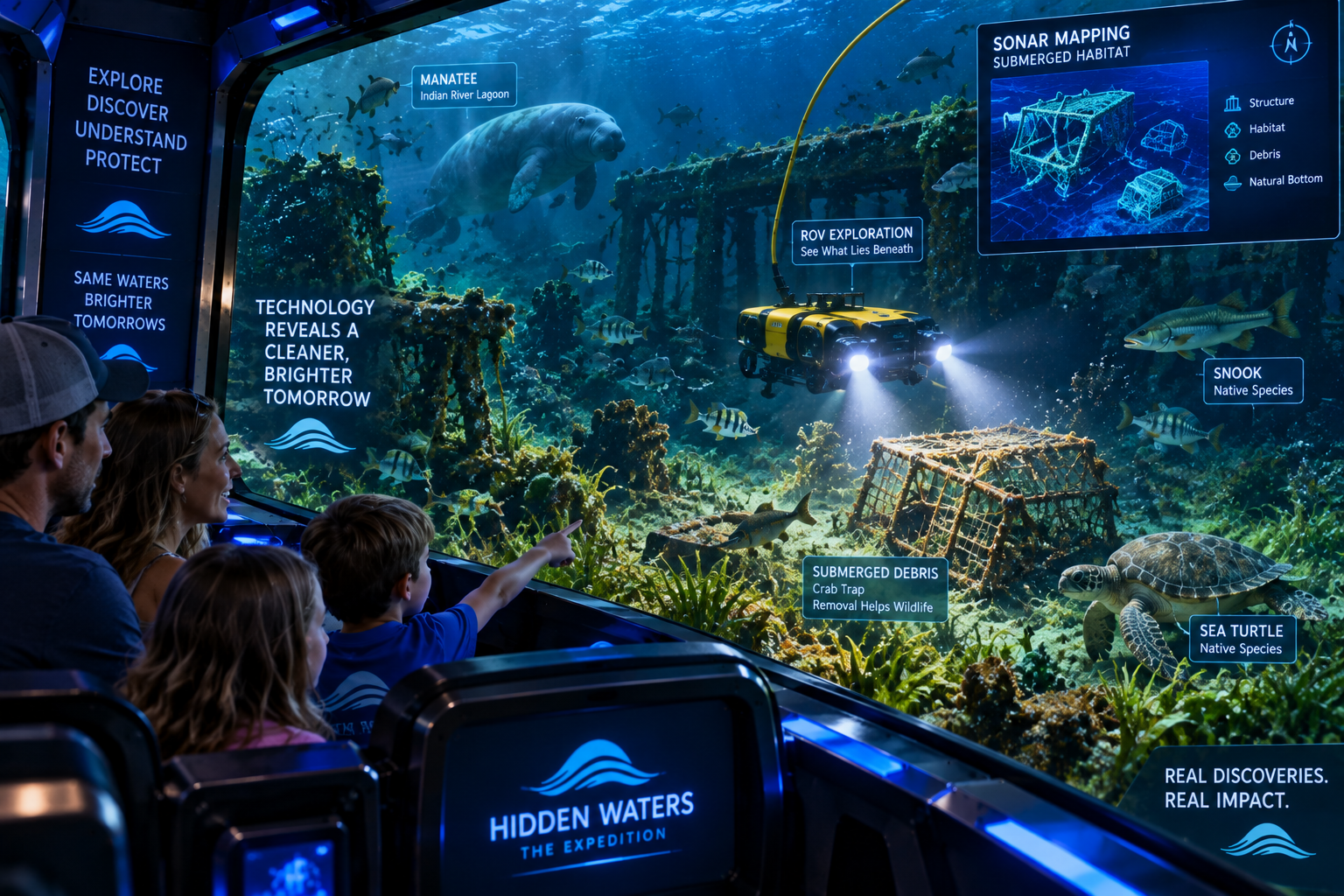
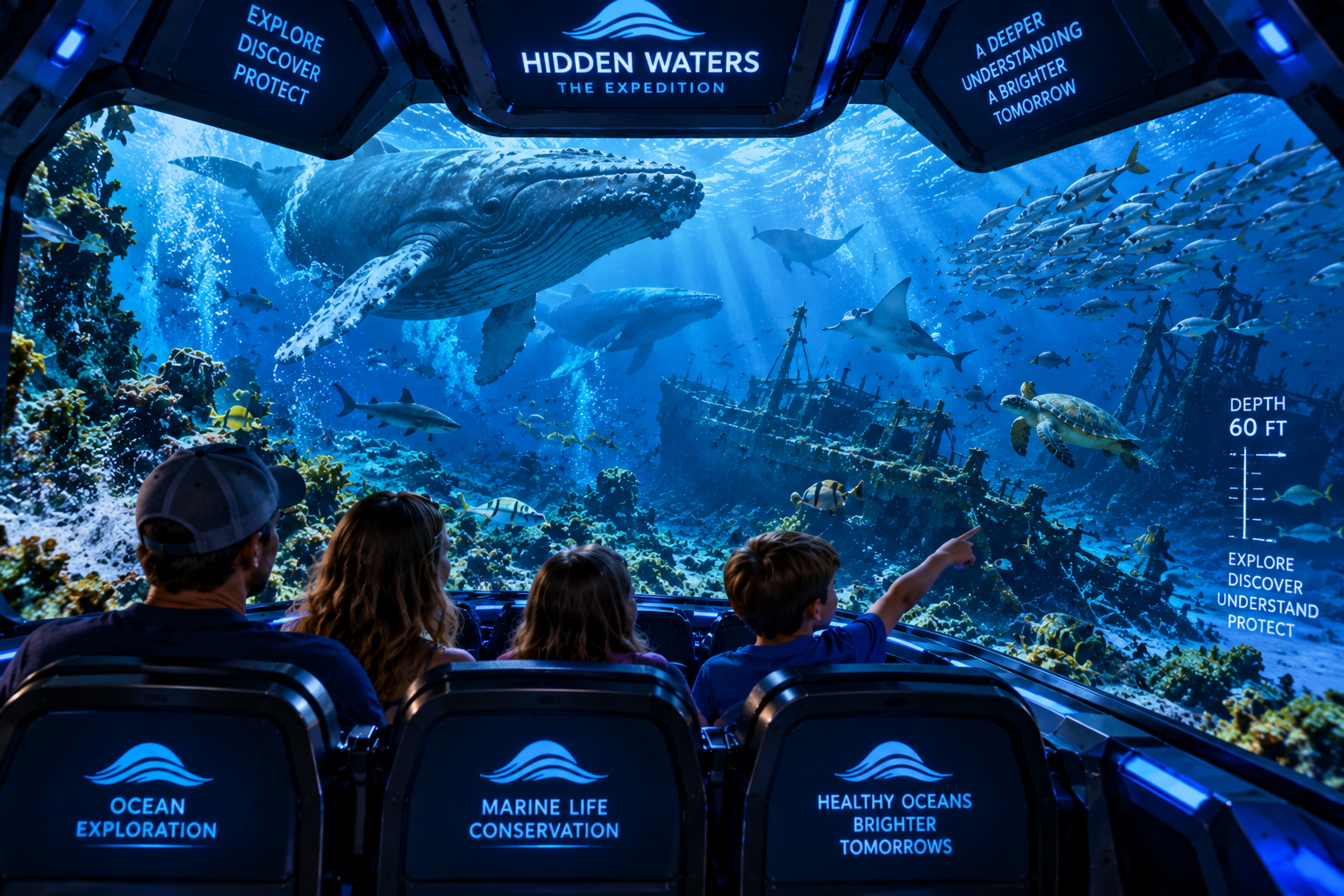
A major purpose-built immersive theater lets visitors travel through the story of the Lagoon and Space Coast rather than just hear it. The primary concept is a shared large-format immersive room — not VR goggles.
The theater uses a large curved or wraparound visual environment with high-resolution projection, spatial audio, lighting, controlled environmental effects where appropriate, optional stereoscopic 3D for selected programs, accessible seating, school-group capability and presentation and event capability.
ROTATING EXPERIENCES
Public Shows
Regular immersive programs for general visitors.
School Programming
Curriculum-connected immersive experiences for student groups.
Conservation Presentations
Research and conservation presentations for the community.
Special Events
Private, corporate and community event capability.
Planning capacity is conceptually in the approximate 75–150 seat range, subject to programming, architecture, engineering and future feasibility. Programs are changeable. Final capacity is not fixed.
One Visit Shouldn't Be Enough.
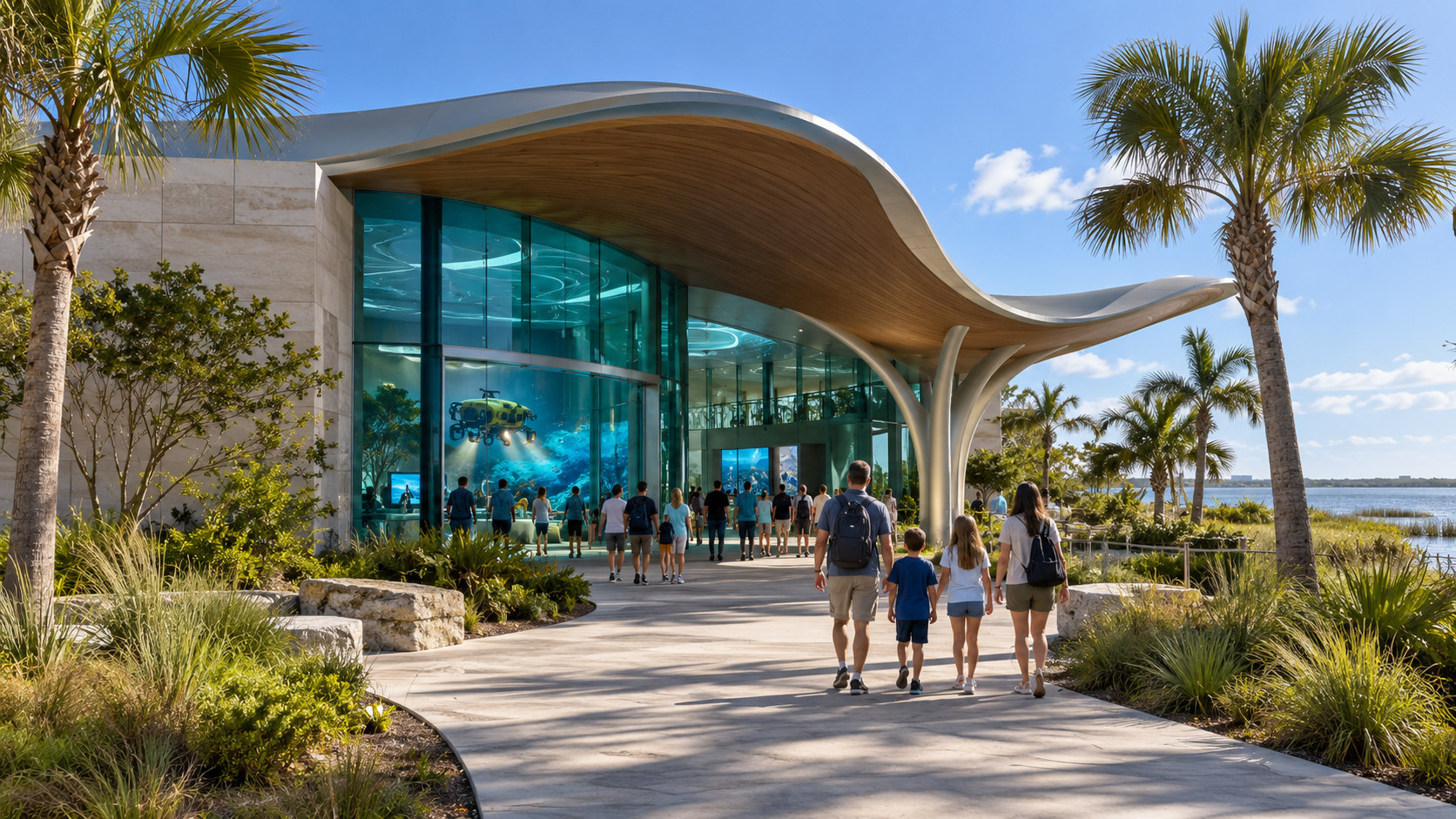
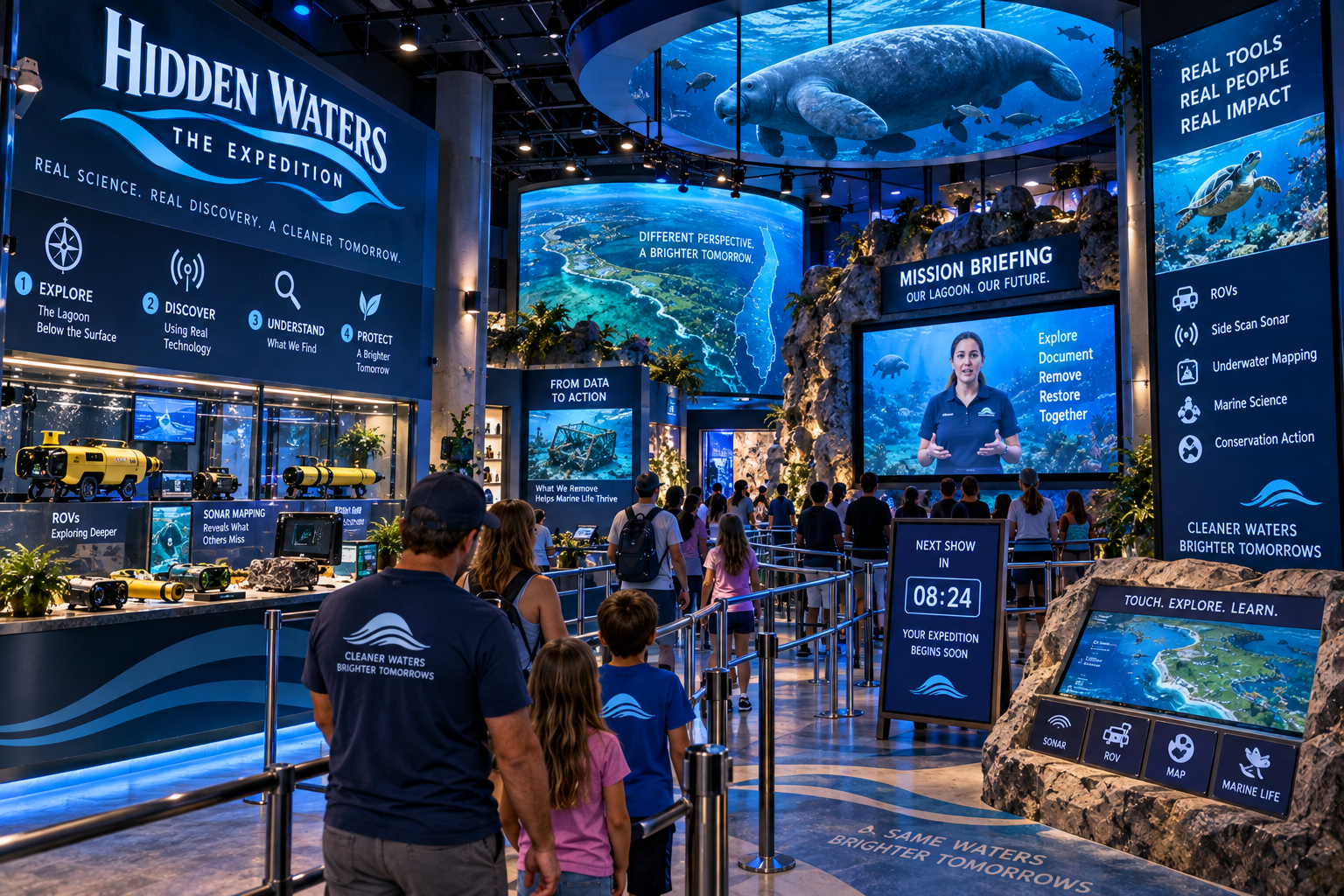
The Center should be designed for repeat visitation. Someone may come for the Living Lagoon, for Lagoon After Dark, for a kayak tour, for an eco-tour, for a launch event, for a school program, for a new research demonstration, for a fabrication demonstration, for a temporary exhibit, for a community event, to bring visiting family, or simply to enjoy NatureScape and the waterfront.
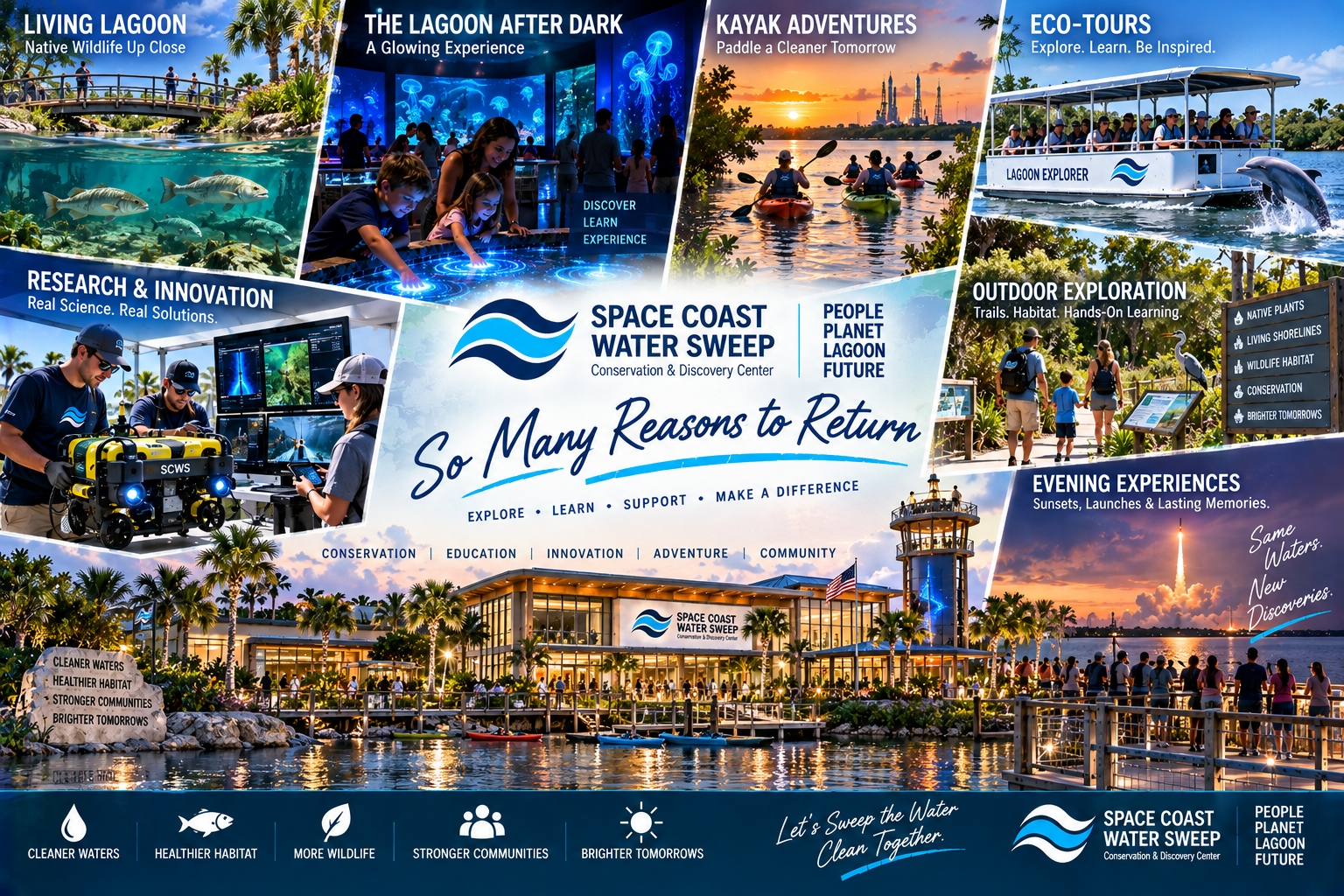
The Experience Can Help Power the Mission.
Earned revenue can complement donations, grants and sponsorships. Potential mission-supporting revenue may eventually include admission or selected ticketed experiences, guided tours, kayak experiences, eco-tours, premium Research & Discovery Vessel experiences, memberships, merchandise, special events, appropriate concessions and private/group programs.
No prices are stated. No revenue projection is claimed. Commercial activity does not replace the nonprofit mission.