The Next Person Who Helps Save the Lagoon
May Walk Through These Doors as a Child.
The Conservation & Discovery Center is envisioned as a place where students, families, teachers, researchers and community members can move beyond reading about conservation and experience it firsthand.
A child may first meet Percy and discover how water reaches the Lagoon. Years later, that same student could return to use sonar, analyze environmental data, design a prototype, participate in university research or build a career protecting Florida's waterways.
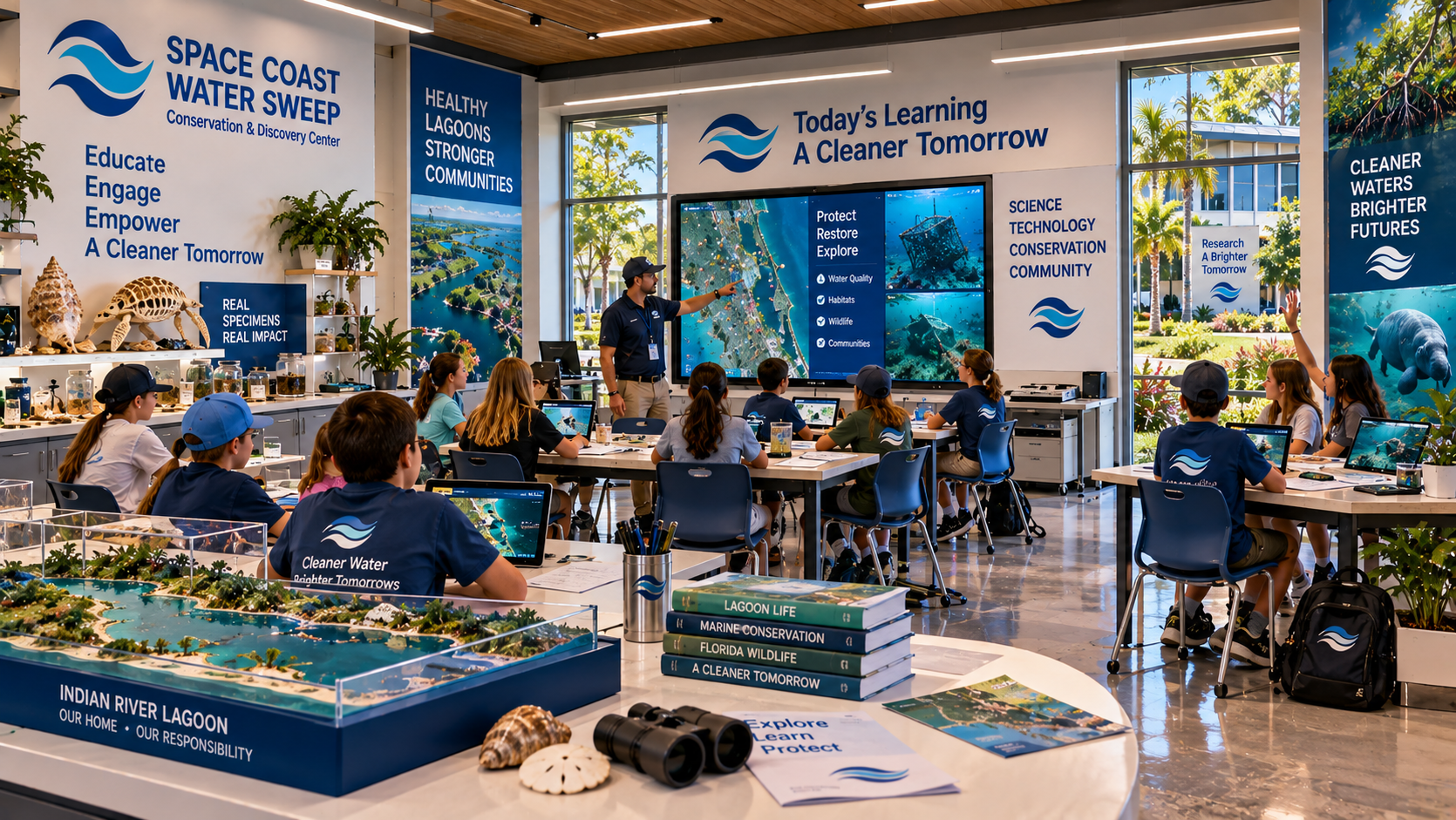
Before Someone Can Protect the Lagoon, They Have to Care About It.
Early education should begin with curiosity rather than technical terminology. Children can discover where water comes from, where stormwater goes, what lives in the Lagoon, why habitats matter, what pollution does, why marine debris matters, how people affect waterways and how conservation helps.
Learning should happen through stories, exploration, touch-friendly interactive exhibits where appropriate, outdoor experiences, observation, simple experiments, games, challenges and Percy.
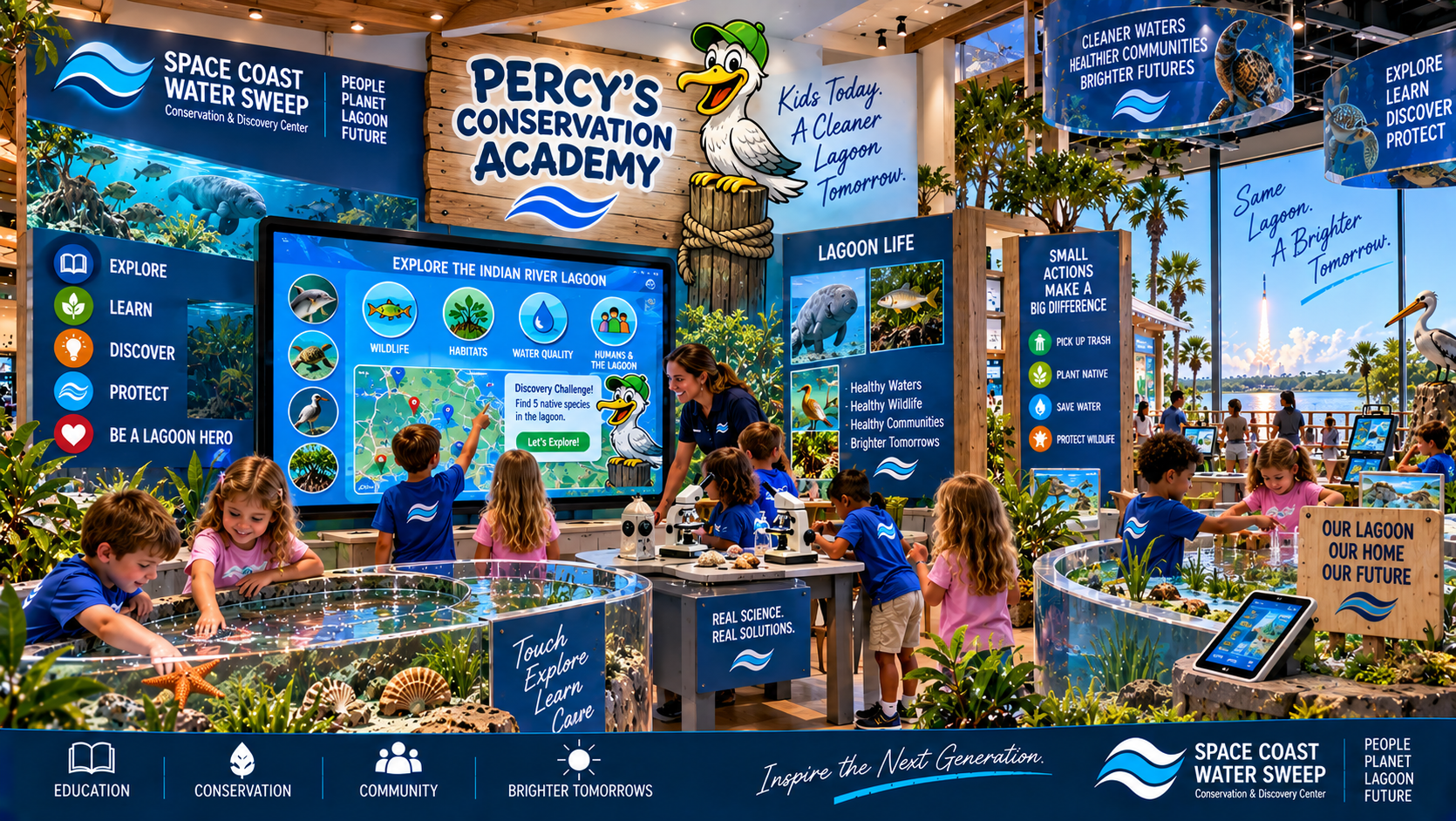
Conservation Needs a Guide Kids Want to Follow.
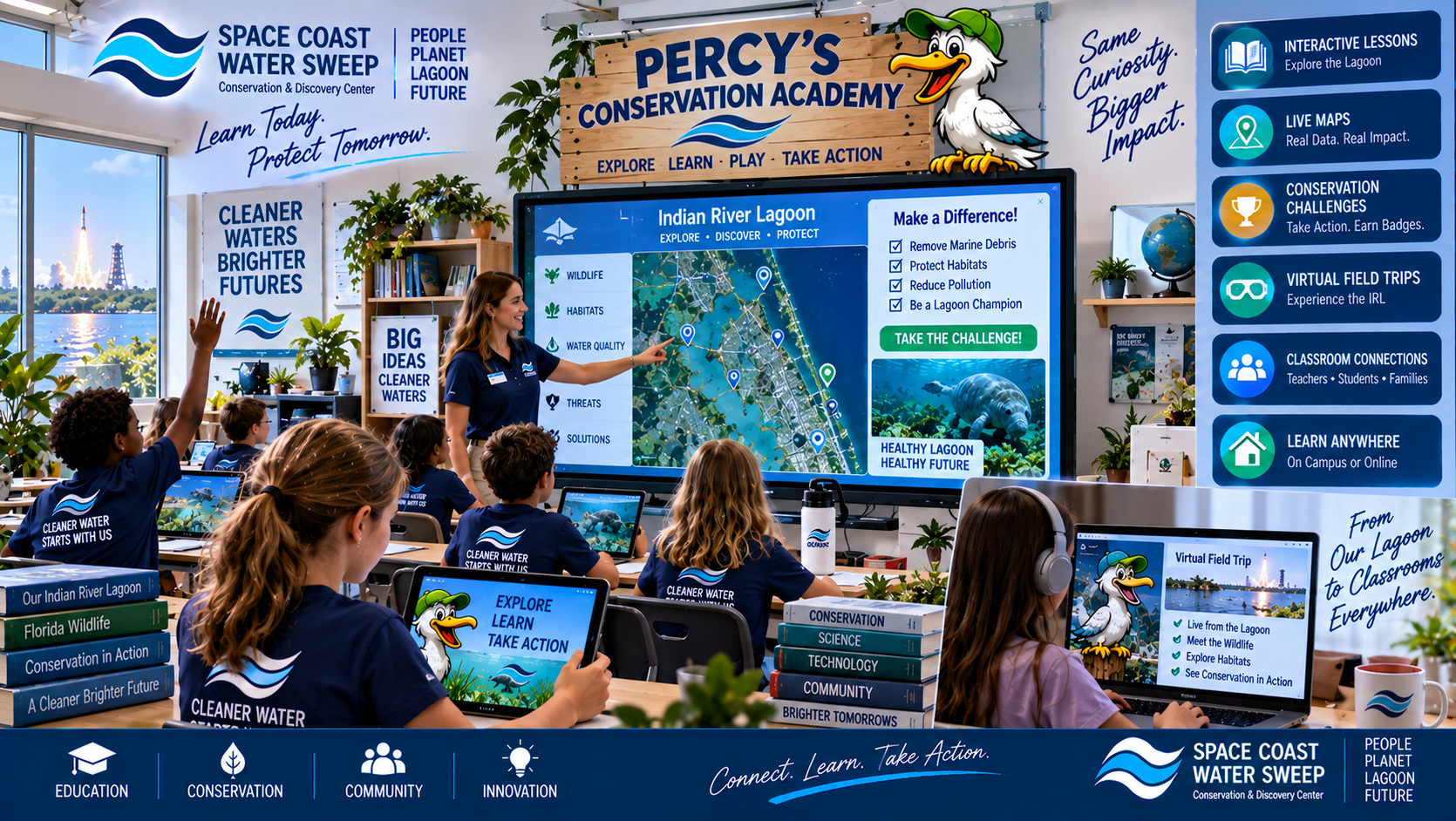
Percy's Conservation Academy should help make environmental science approachable without replacing teachers, scientists or real field expertise. Percy should connect digital learning to real experiences — a student might hear Percy say “Let's find out where the water goes” and then physically follow that idea through the Center.
Percy is an educational guide, not an autonomous authority for scientific or safety decisions.
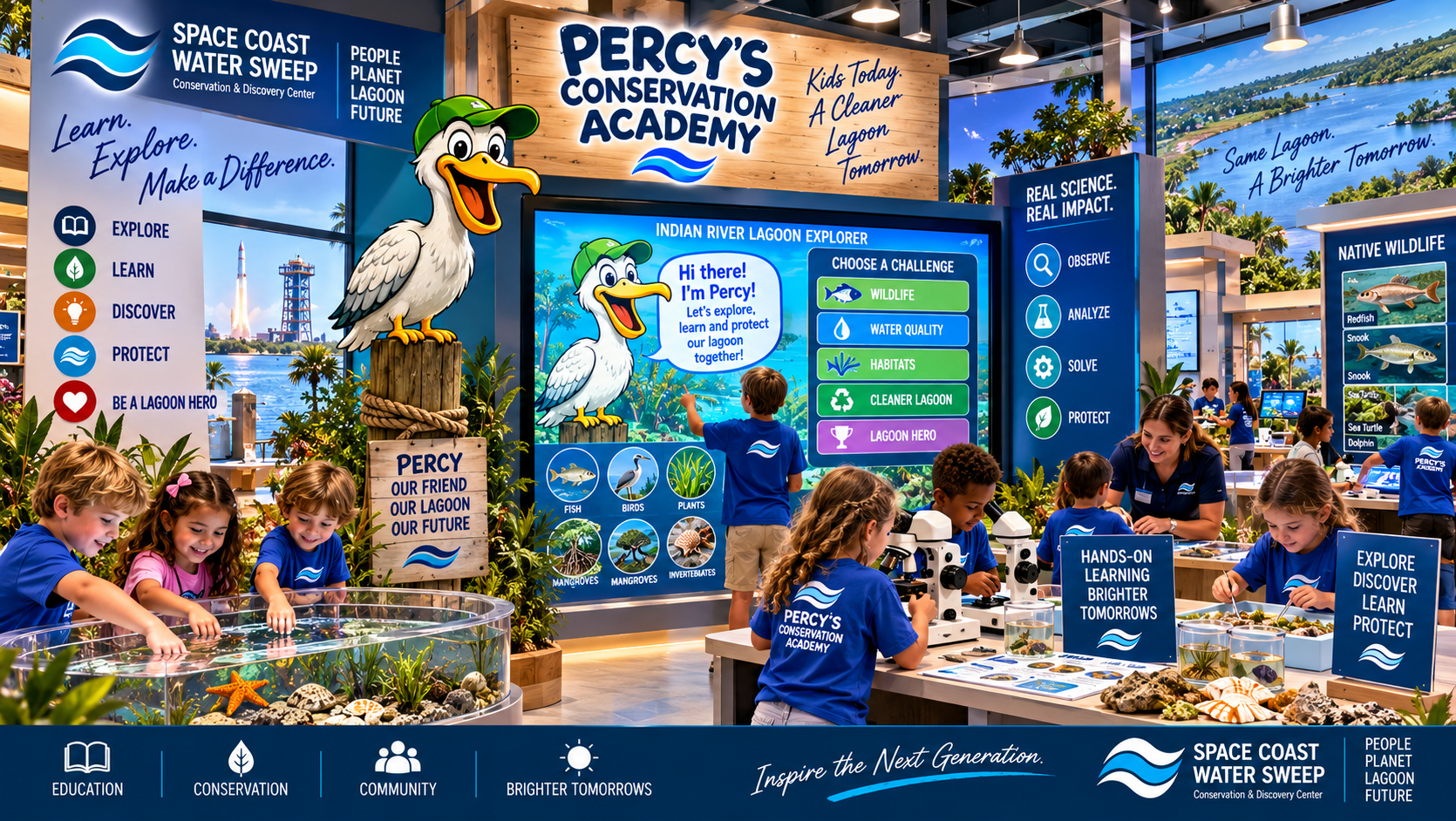
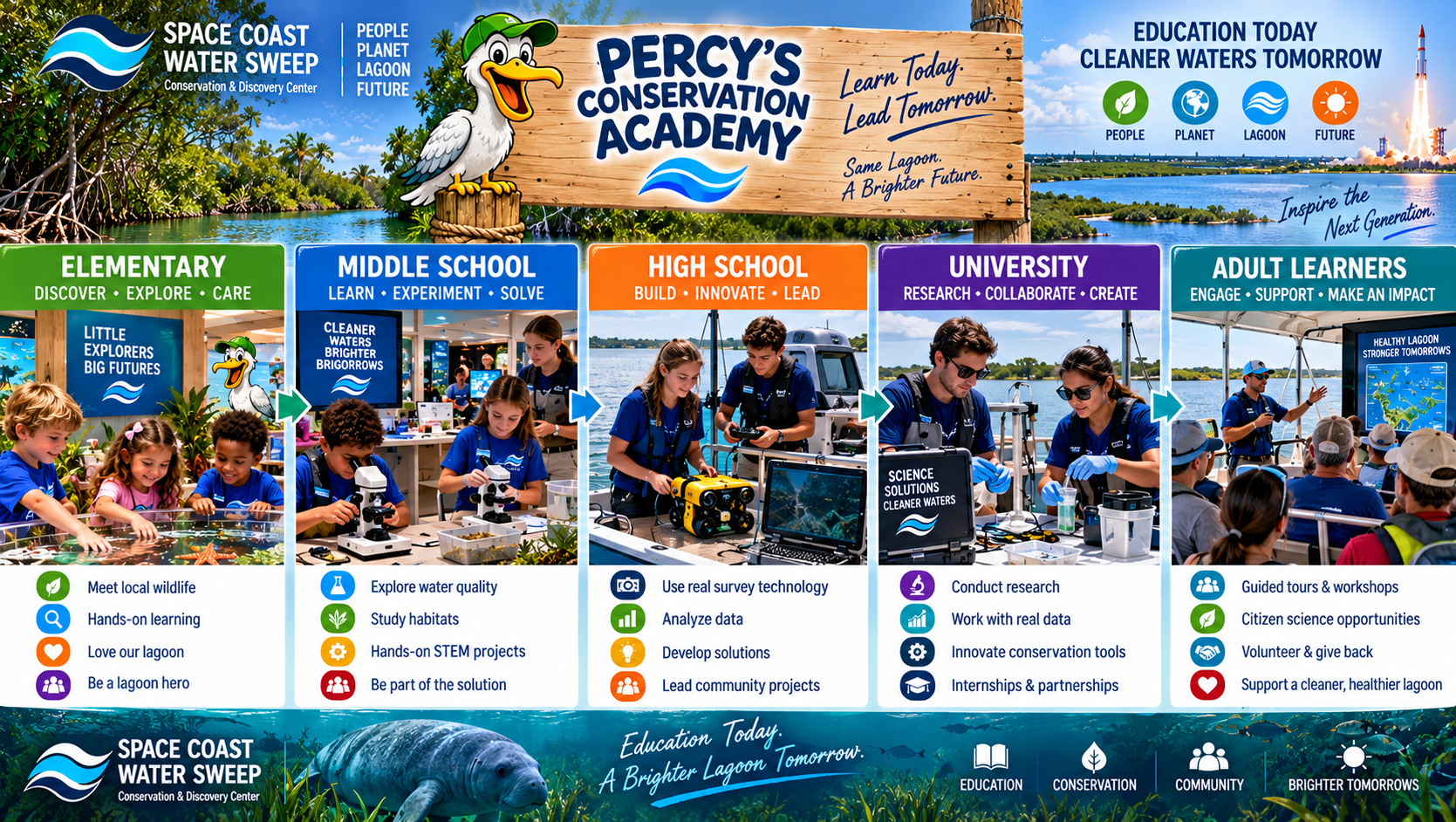
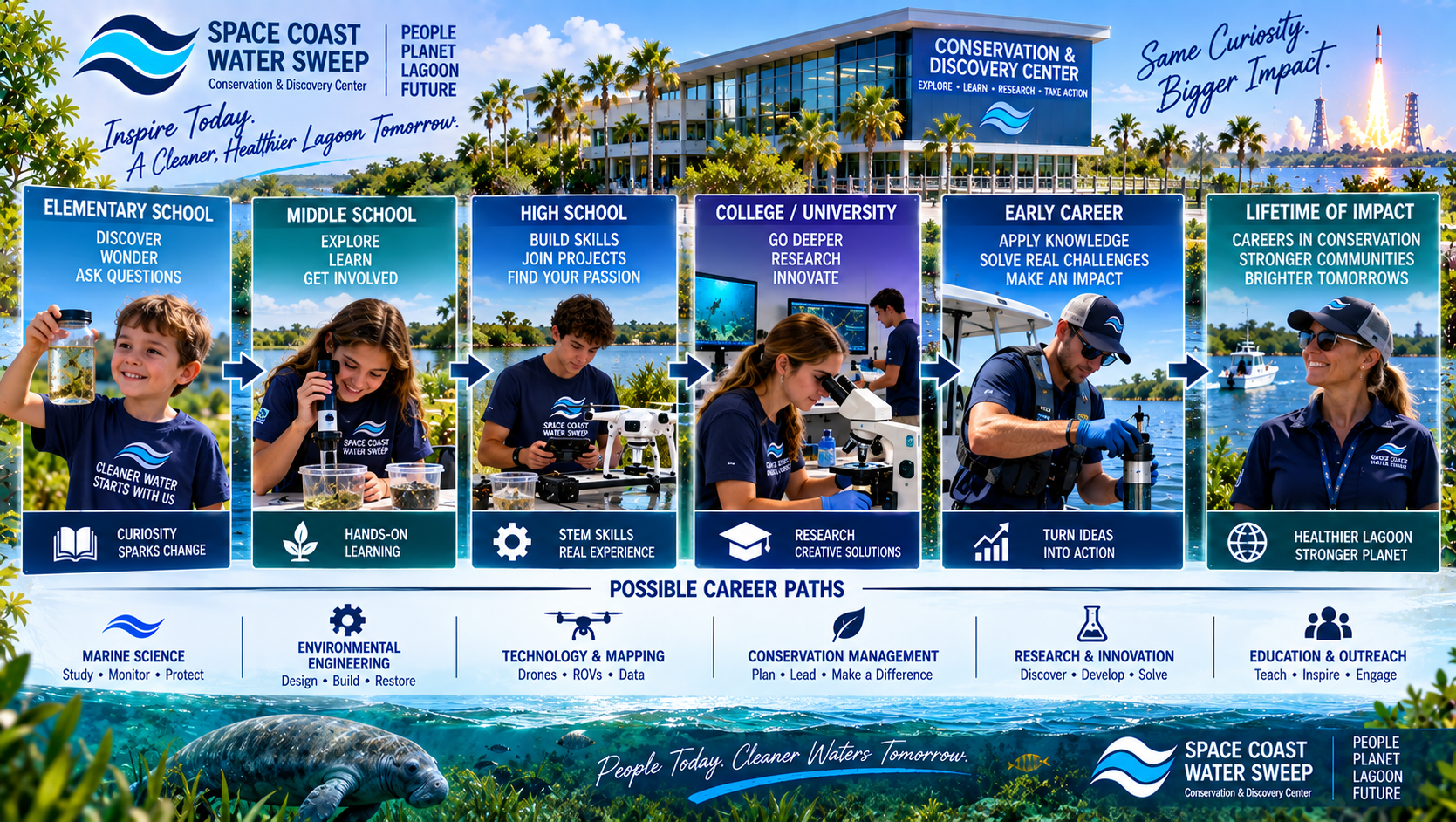
The Same Lagoon Can Teach Something Different at Every Age.
ELEMENTARY
MIDDLE SCHOOL
HIGH SCHOOL
COLLEGE / UNIVERSITY
COMMUNITY / LIFELONG LEARNING
Water Is Life Supports Learning at Every Age.
The Water Is Life signature exhibit is not only a visitor experience — it is an educational platform. Age-layered interactions mean children can play while older students access deeper science, and adults can explore what's hidden in water regardless of their background. School groups, STEM programs and community visitors can all find their appropriate level of engagement.
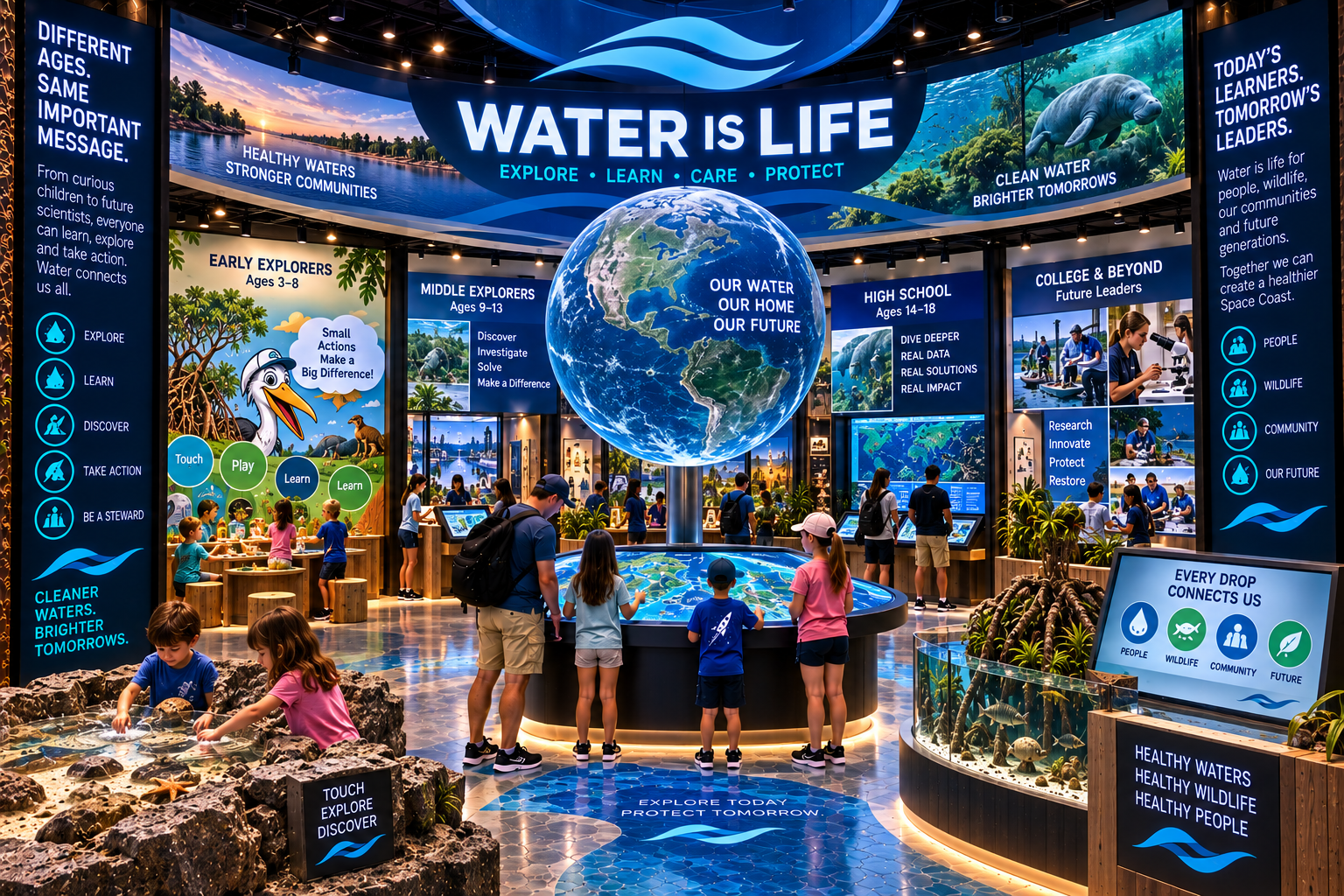
Young Children
Interactive water play, making it rain, moving water, building a shoreline — sensory discovery that builds early curiosity about why water matters.
School Groups & STEM
Age-appropriate water chemistry, dissolved oxygen, salinity, turbidity, nutrients and microplastics — connecting water science to curriculum standards and STEM learning.
Adults & Community
Deeper water-quality science, environmental conditions, what's hidden in water and what conservation actions can help — accessible to any visitor regardless of background.
A scientific guardrail: Visually clear water does not automatically mean healthy or safe water. Water can look clean while containing things we cannot see. This exhibit teaches visitors of every age to look beyond what's visible — to water chemistry, dissolved oxygen, salinity, temperature, nutrients, turbidity, microorganisms, microplastics and more.
The Best Classroom May Be the Campus Itself.
The Center's existing experiences can become educational tools — each one connecting a different part of the Lagoon story to a different kind of learning.
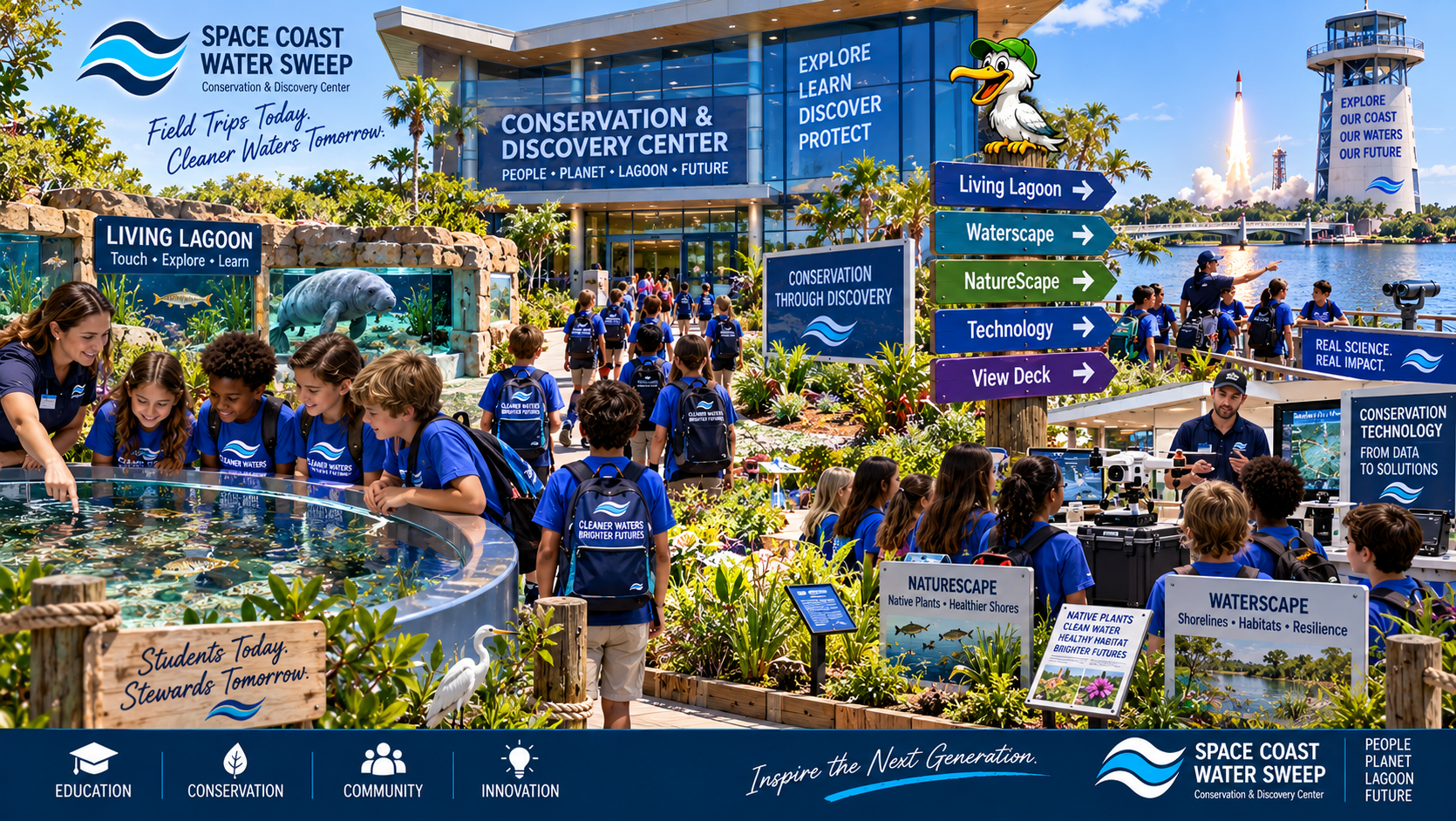
Don't Just Show Students a Picture of Sonar. Let Them Understand How It Works.
Appropriate hands-on exposure to technology helps students understand what a tool sees, what data it creates, how people interpret it and how it helps conservation. Experiences must be appropriate to age, safety, regulations and equipment availability.
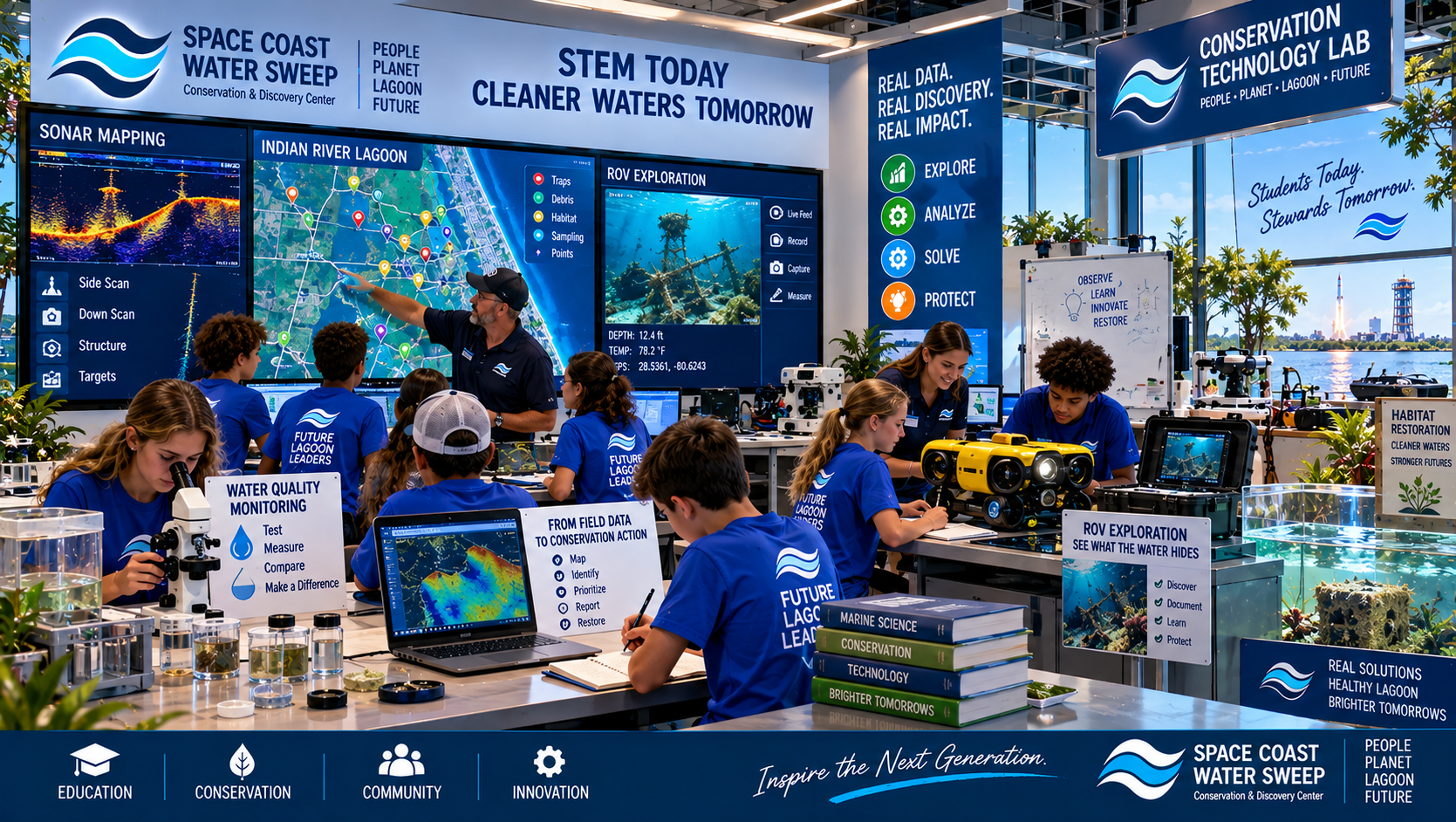
The Lesson Doesn't Have to End When Students Leave the Building.
Supervised field experiences can connect classroom learning to the real Lagoon. Students do not participate in hazardous debris recovery and do not perform regulated scientific work without appropriate supervision or protocols.
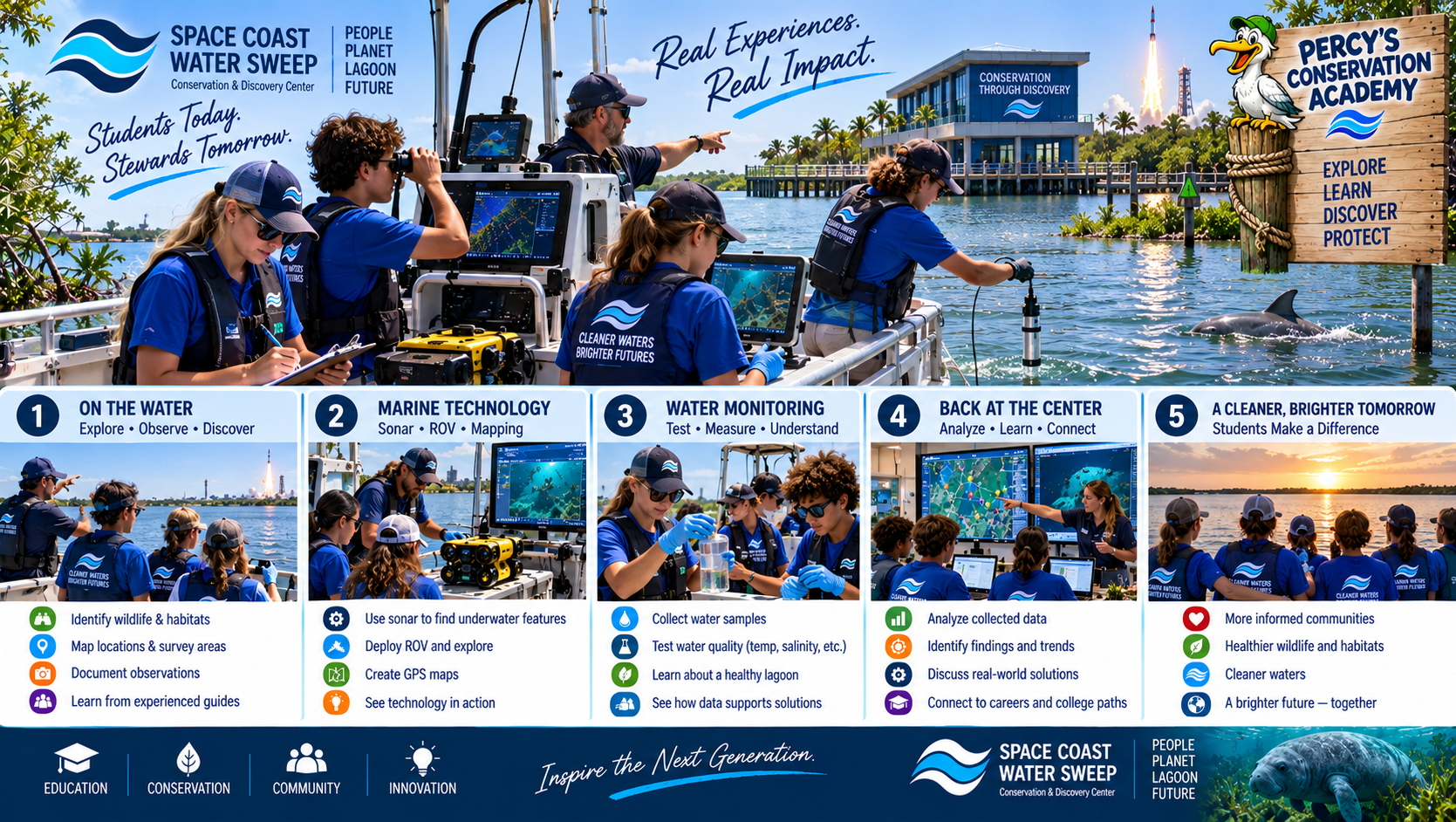
A Field Trip Can Become a Research Project.
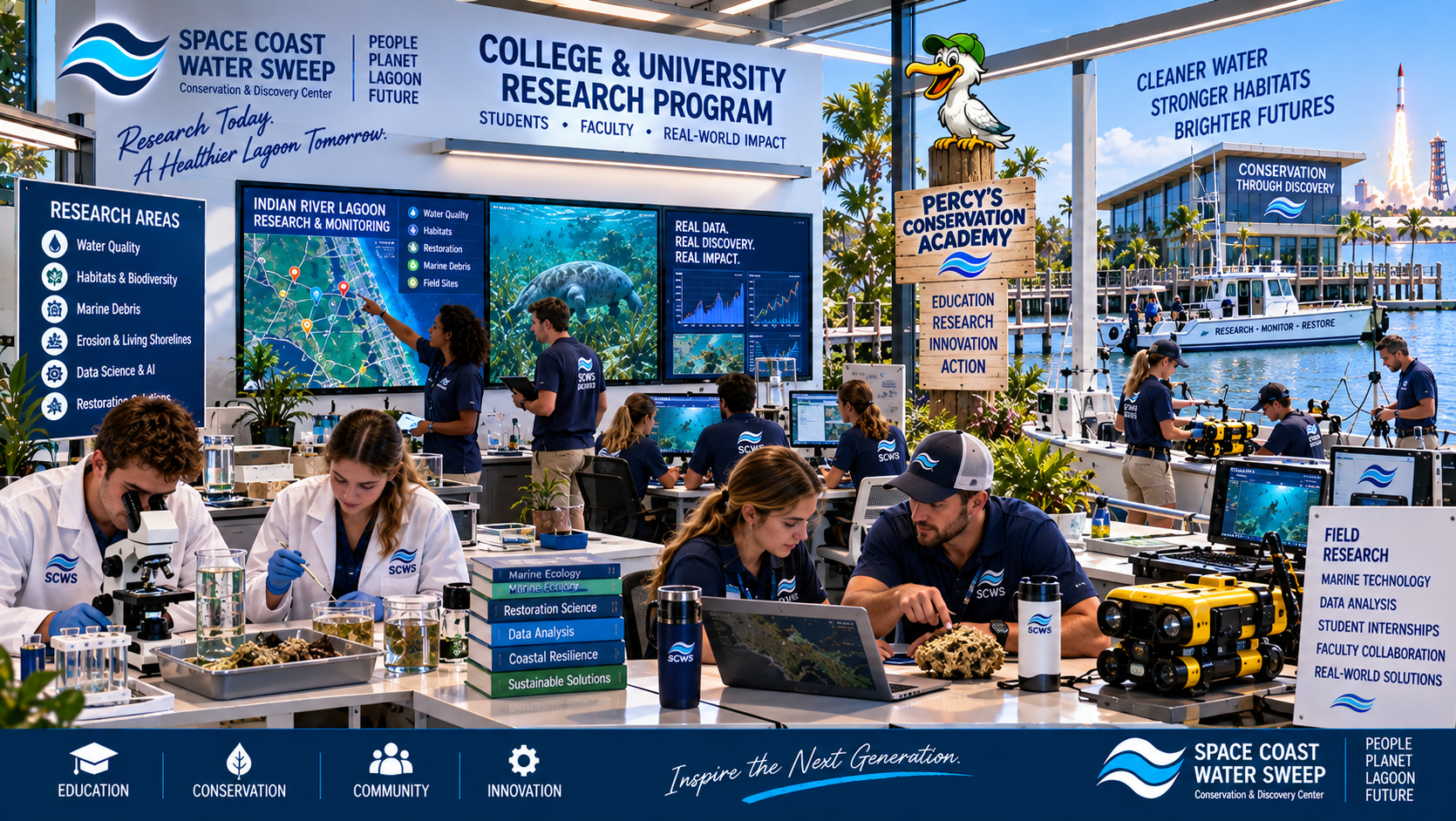
Potential opportunities for colleges and universities span marine science, environmental science, biology, ecology, engineering, coastal engineering, materials science, robotics, computer science, AI/data science, GIS, environmental technology, communications and education. No formal university partnerships are claimed unless authorized.
What If the Assignment Was to Solve a Real Problem?
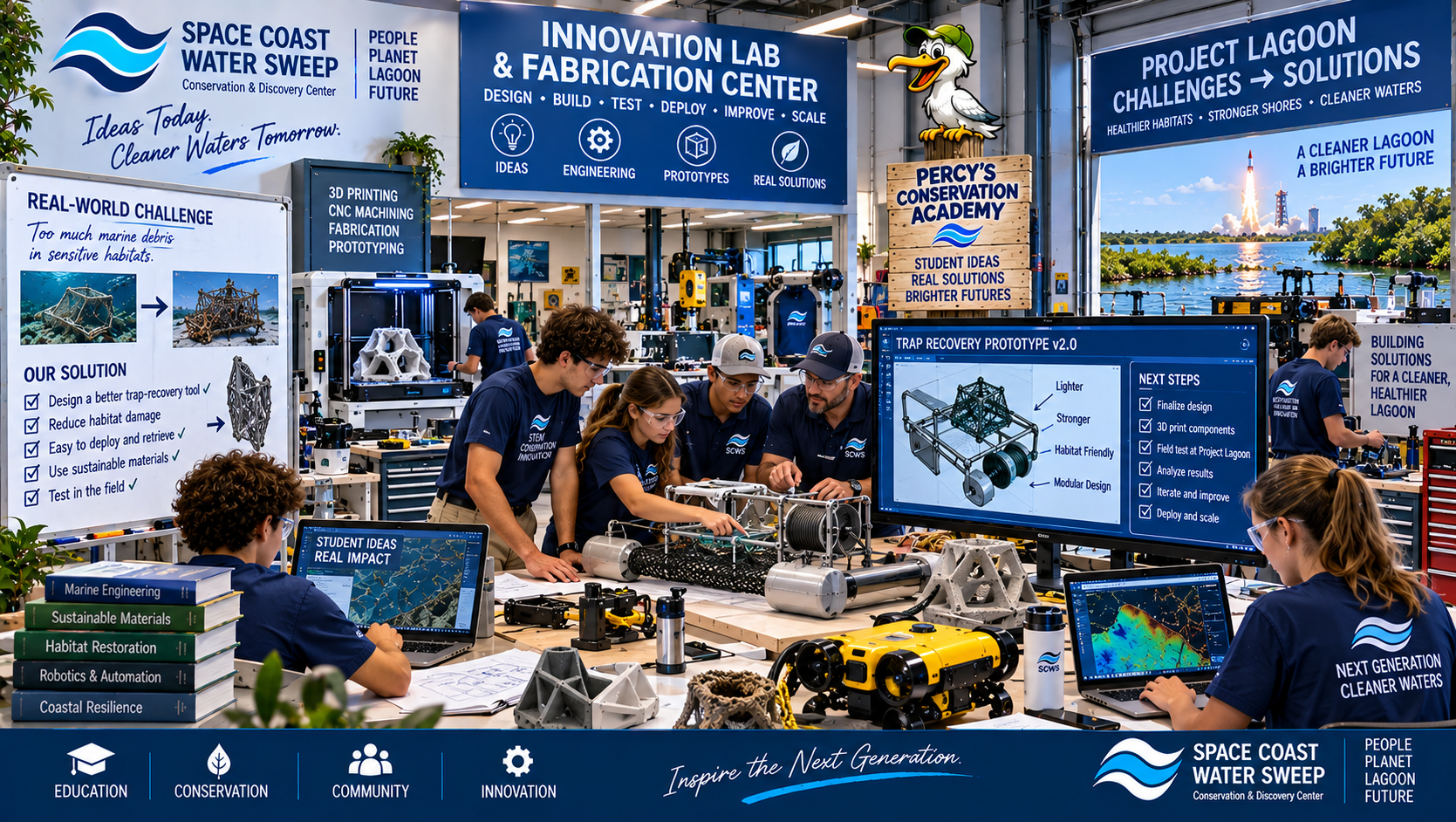
Education can connect directly to the Innovation Lab and Conservation Fabrication & Innovation Center. A Project Lagoon field observation could become a student challenge: study the problem, design a solution, build a prototype, test it, analyze results and improve it. All projects remain subject to appropriate technical, safety, environmental, IP and regulatory review.
The Center Should Help Teachers Before, During and After the Field Trip.
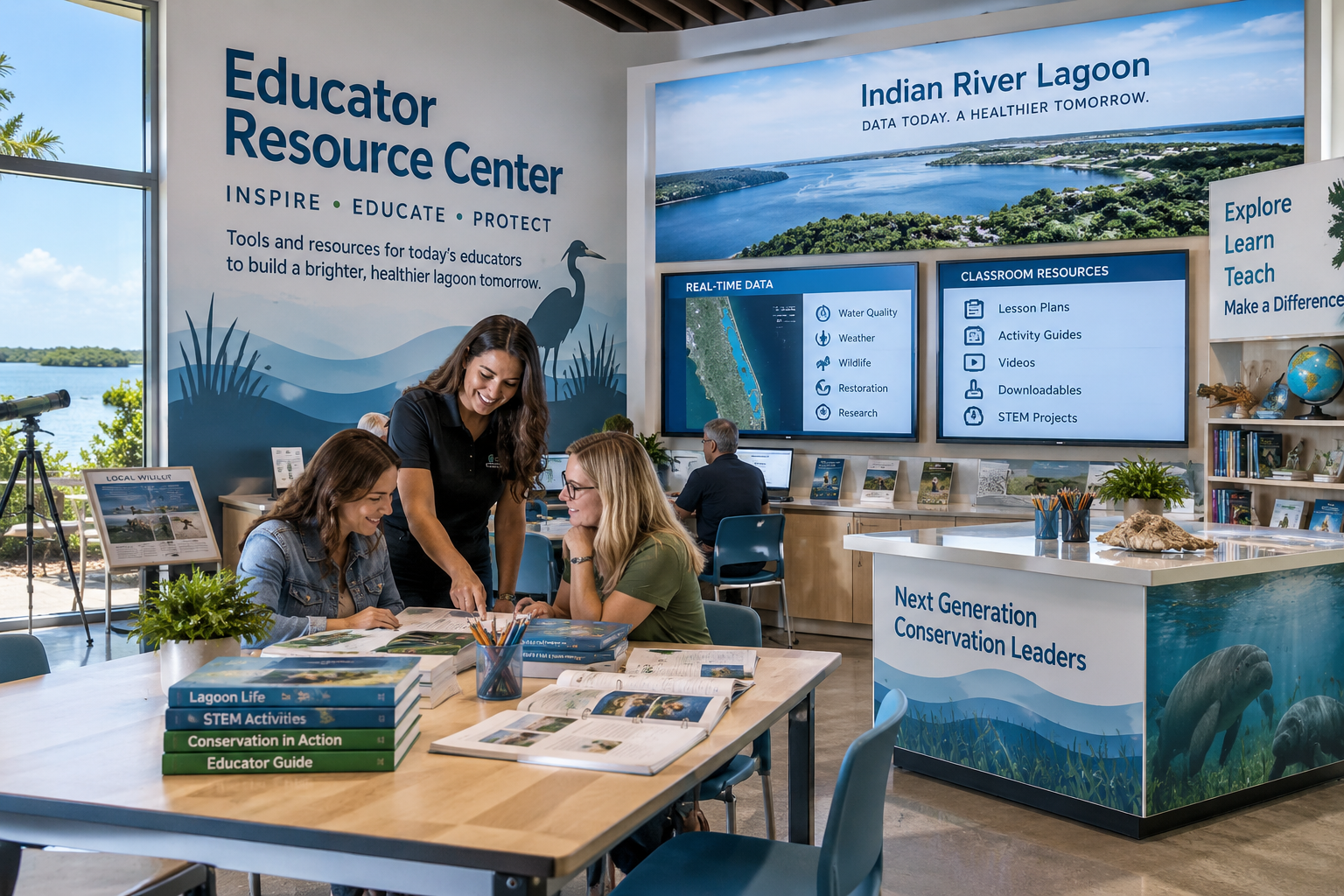
Potential teacher resources are designed to support educators throughout the field-trip experience. Curriculum alignment and state approval are not claimed unless actually developed.
You Shouldn't Have to Be a Student to Keep Learning.
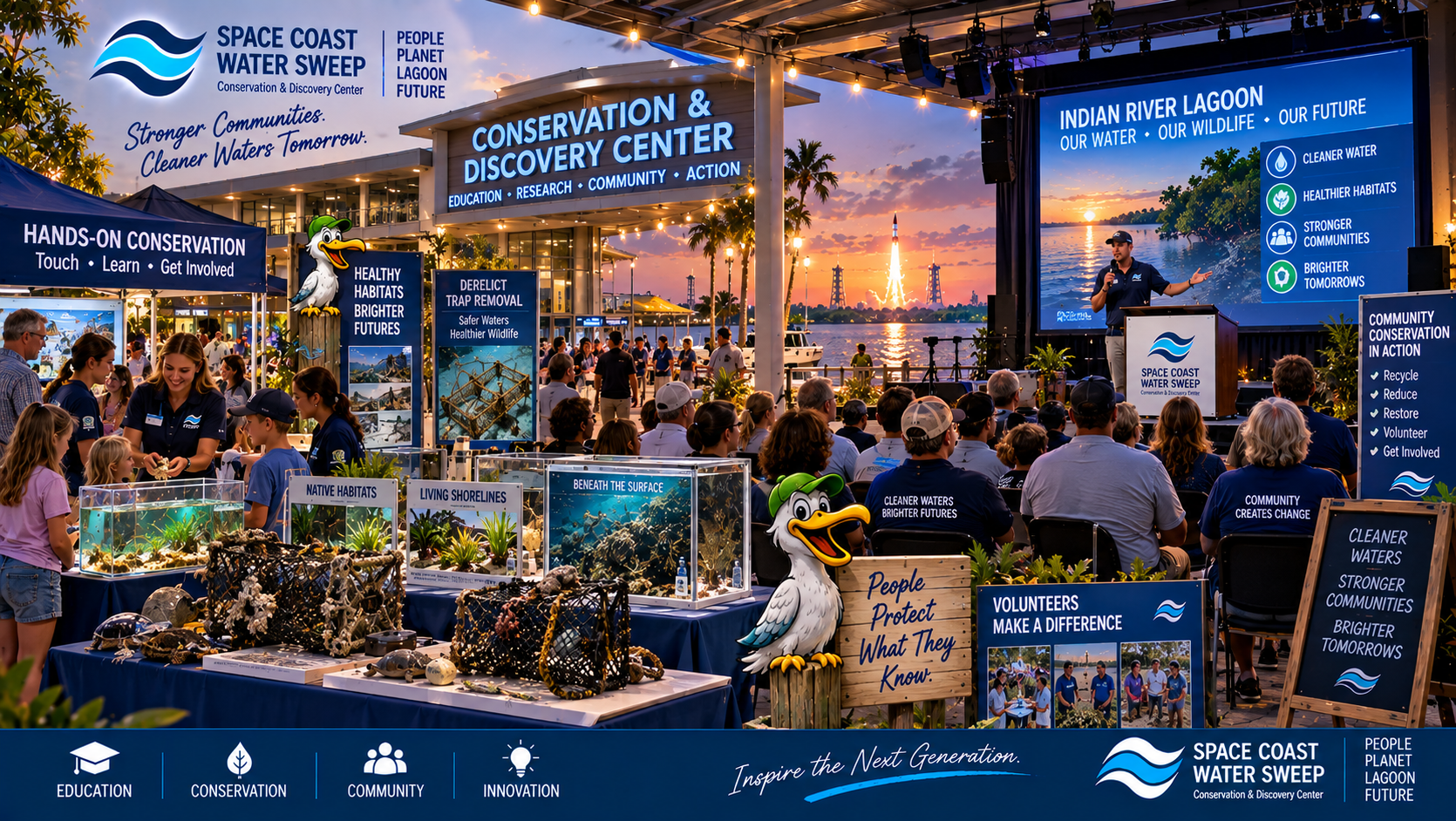
The Center should become a place where the Space Coast can gather around the Lagoon — with public lectures, scientist talks, conservation demonstrations, workshops, volunteer training, Lagoon history, technology demonstrations, restoration presentations, native landscaping education, community science where appropriate, family programs, evening programs and special events.
Learning Becomes More Powerful When People Can Do Something With It.
Appropriate education can lead to conservation action. All existing SCWS safety and authorization requirements are maintained. Not every visitor can independently remove marine debris or derelict fishing gear.
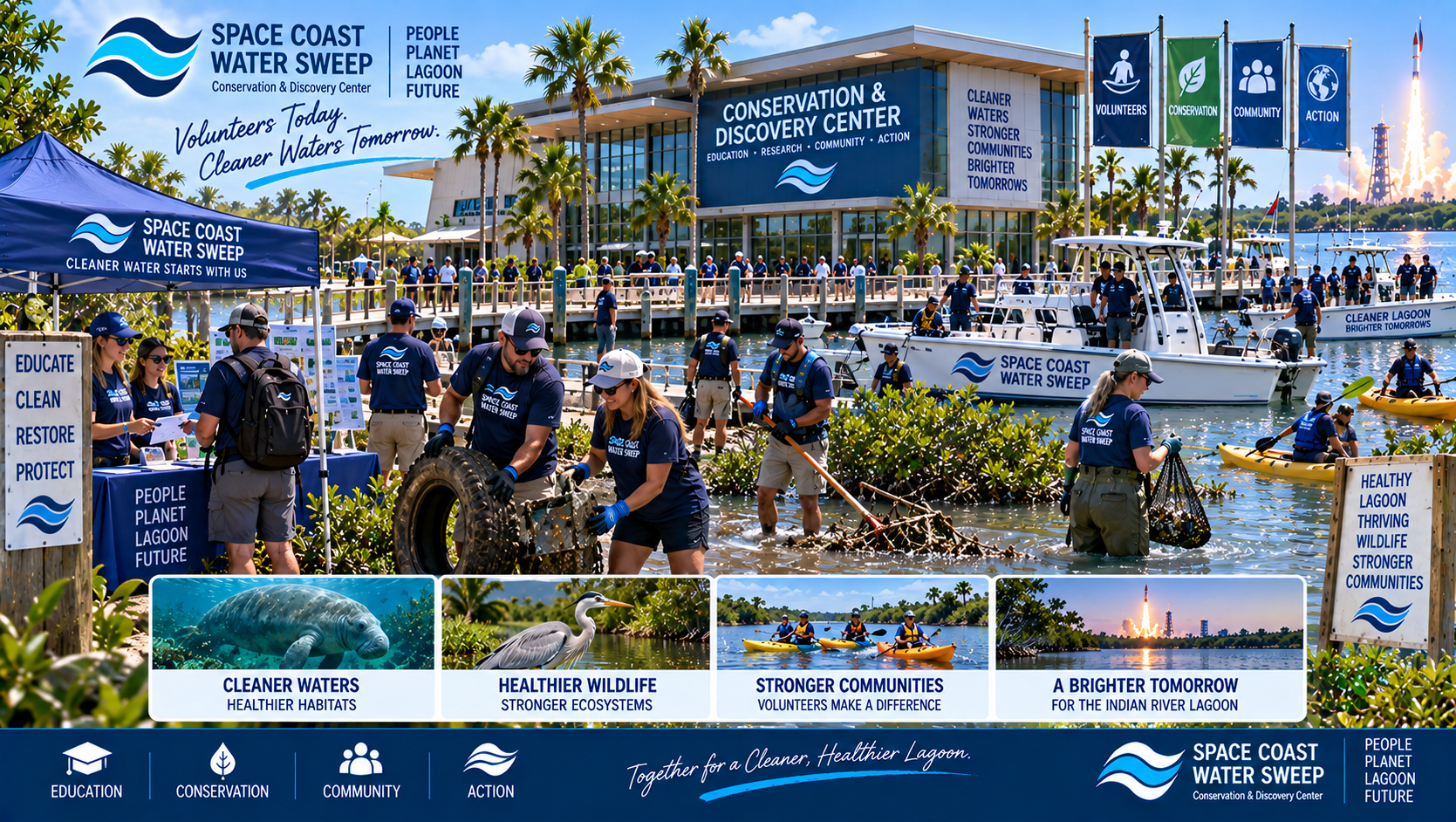
Learning Can Lead Directly to Participation.
Education is not separate from action. The Volunteer & Events Display connects what visitors learn to what they can do. A visitor who discovers why water matters in the Water Is Life exhibit can walk to the Volunteer & Events Display and find a cleanup, a kayak event or a conservation mission that fits their schedule — turning curiosity into commitment.
Arrive at the Center and explore the exhibits.
Discover why the Lagoon matters through Water Is Life, the Living Lagoon and the full educational experience.
See what SCWS volunteers do — land cleanups, water cleanups, kayak events, crab-trap removal and community conservation.
Find your next conservation mission through the Volunteer & Events Display and register for an event.
Come back for new programs, changing exhibits, seasonal experiences and deeper involvement over time.
All existing SCWS safety and authorization requirements are maintained. Not every visitor can independently remove marine debris or derelict fishing gear. Volunteer activities remain subject to training, authorization and appropriate supervision.
Someone Who Visits on a School Trip Could Come Back Years Later to Work Here.
The Center could expose students to career pathways they may not otherwise encounter — from marine science and engineering to field operations and nonprofit leadership. Employment is not promised.
The Conservation Academy Doesn't Have to Stop at the Front Gate.
Future digital education can extend the mission beyond physical visitors — potentially allowing schools and families outside Brevard County to participate. National distribution or adoption is not claimed.
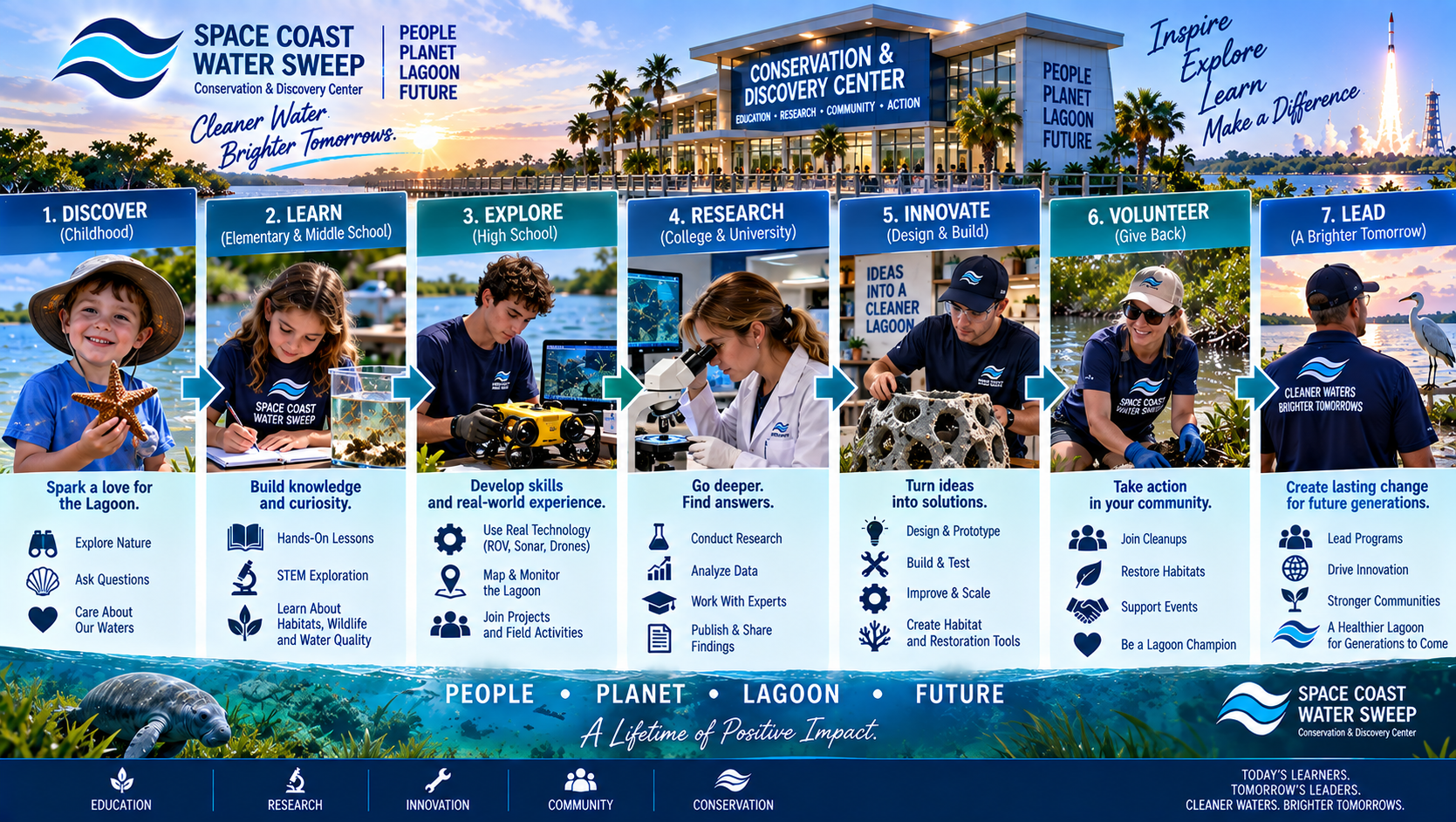
From Curiosity to Capability.
The long-term goal is not simply to teach someone one fact about the Indian River Lagoon. It is to create opportunities for people to deepen their relationship with conservation throughout their lives.
CHILD → STUDENT → RESEARCHER → VOLUNTEER → PROFESSIONAL → CONSERVATION LEADER
Support This Education Work
Help develop lagoon learning activities, educational materials, field demonstrations, and outreach with schools and community partners.
Support Lagoon Education & STEM Programs